Some trips are best remembered as a map. This is our Budapest week retraced in order — not only what happened, but where it happened, and how one day spilled into the next.
We landed a half-day late, settled into a 130-year-old flat in the old Jewish Quarter, and spent the next week tracing loops out from its courtyard door — up to the bastions of Buda, out onto the river, and finally an hour west to a neo-Gothic castle. Follow the numbered maps; they are drawn from where our own photos were actually taken.
Our front door for the week opened off a courtyard in Erzsébetváros, the old Jewish Quarter of District VII, on Király utca. The building is a bérház — a grand rental tenement of the kind that filled Pest during its building boom of roughly 1880–1910 — wrapped around a single rectangular courtyard, with a through-block plot running all the way back to Kazinczy utca. The courtyard photos show the classic features: cantilevered iron-railed gallery walkways (the függőfolyosó) ringing each floor, a pink-rendered facade, and the service circulation pressed against the courtyard side.
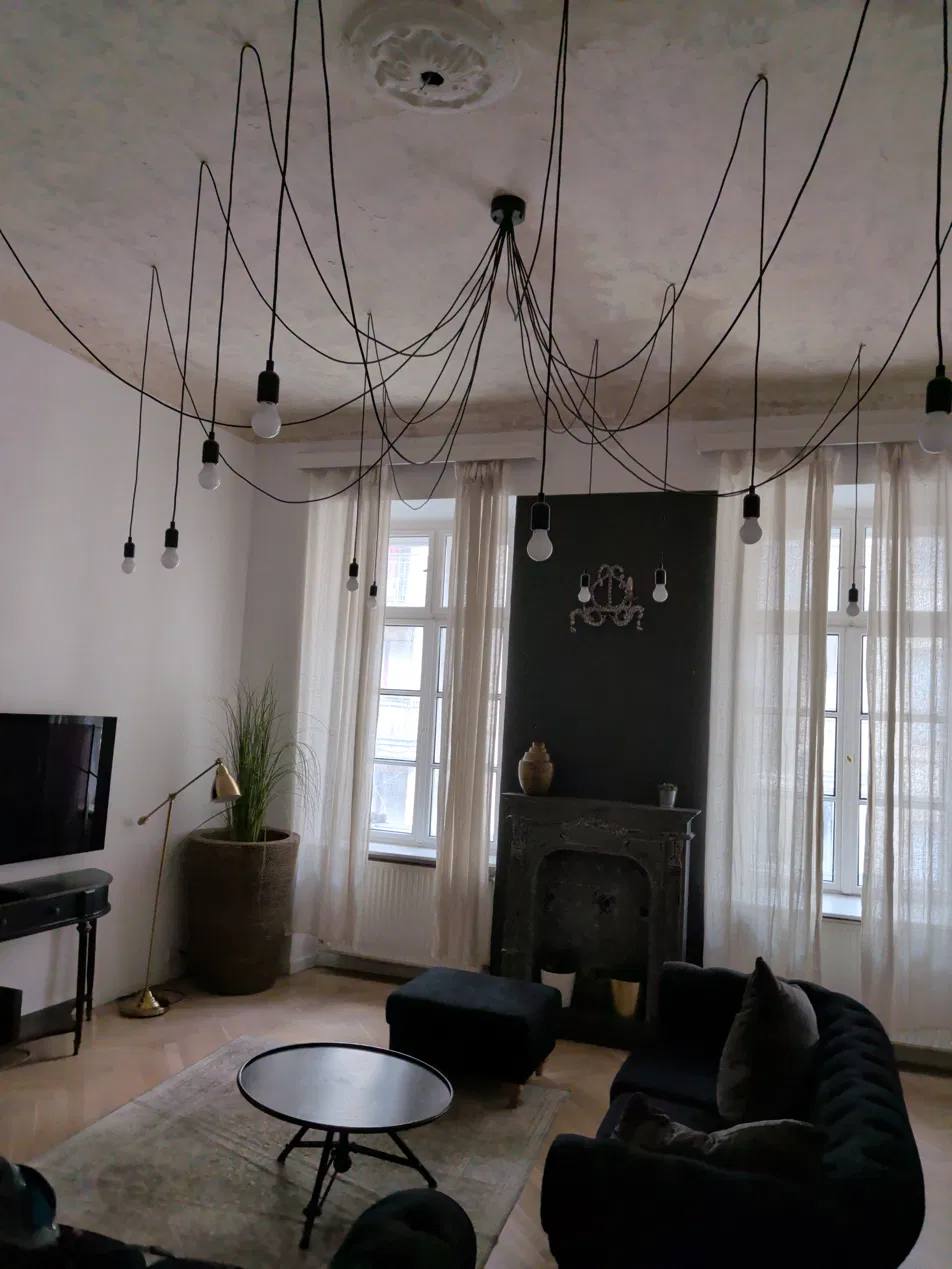
The flat still wears genuinely high-status original detail — a moulded plaster ceiling rosette in the salon, an enfilade of tall double doors with glazed transoms, a decorative cast-iron fireplace, herringbone parquet. That marks a nagypolgári (grand-bourgeois) apartment. But its third-floor, street-facing position places it a clear step below the building’s top tier: in a pre-elevator bérház the prestige flat was the first floor (the bel étage), with each floor above renting for less. So the original tenant was most likely solid professional class — a lawyer, doctor, merchant, or mid-level official — rather than aristocracy. A bourgeois flat of this type was organised as an enfilade: a run of interconnected rooms strung along the street front, joined by tall double doors, with the kitchen and servants’ spaces on the courtyard side. Food travelled kitchen → dining room → salon, the salon sitting furthest forward as the formal room facing the street. The children slept together in a gyerekszoba; a live-in maid slept humbly in a tiny cselédszoba on the service side, or on a folding bed in the kitchen.
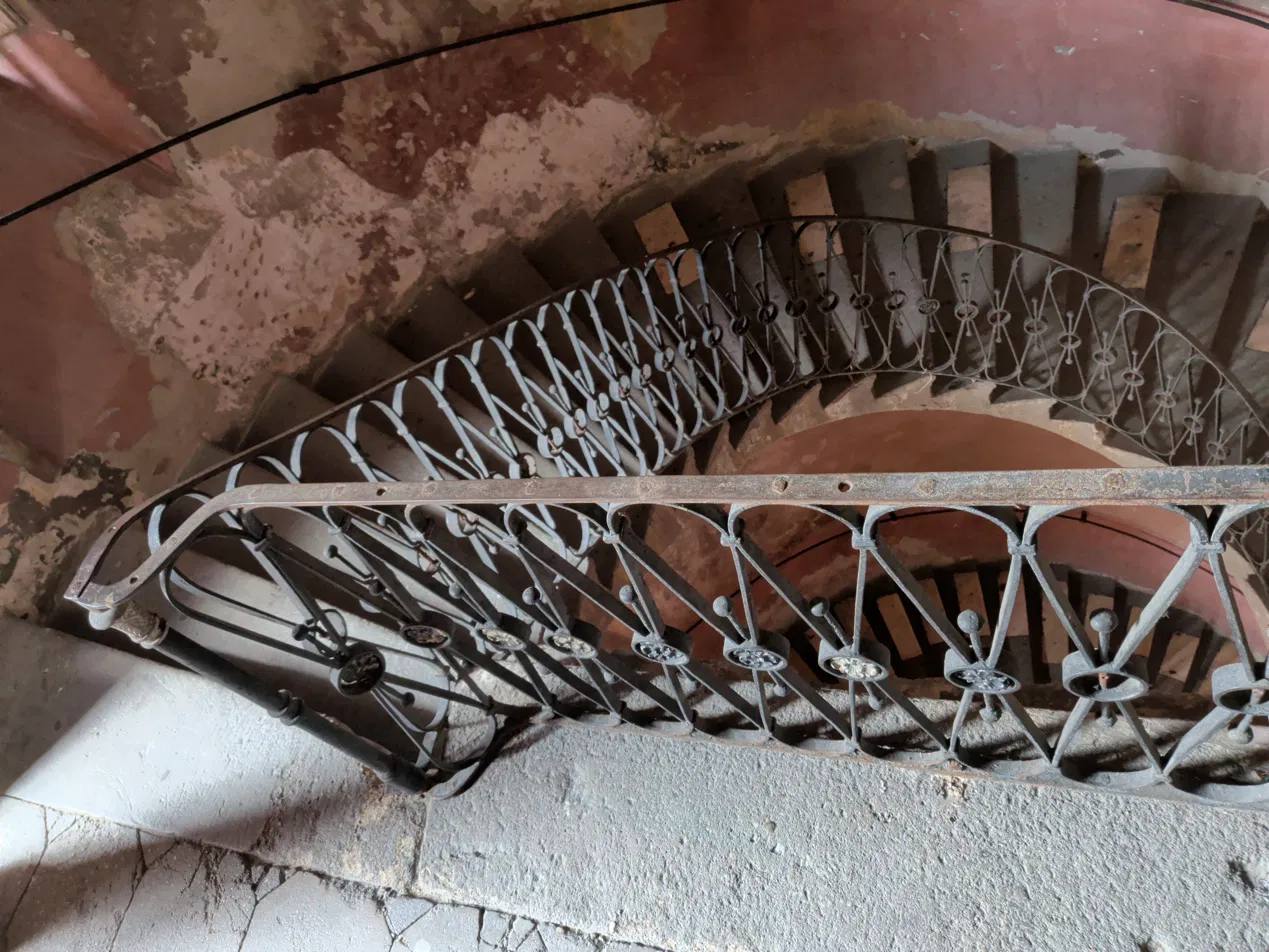
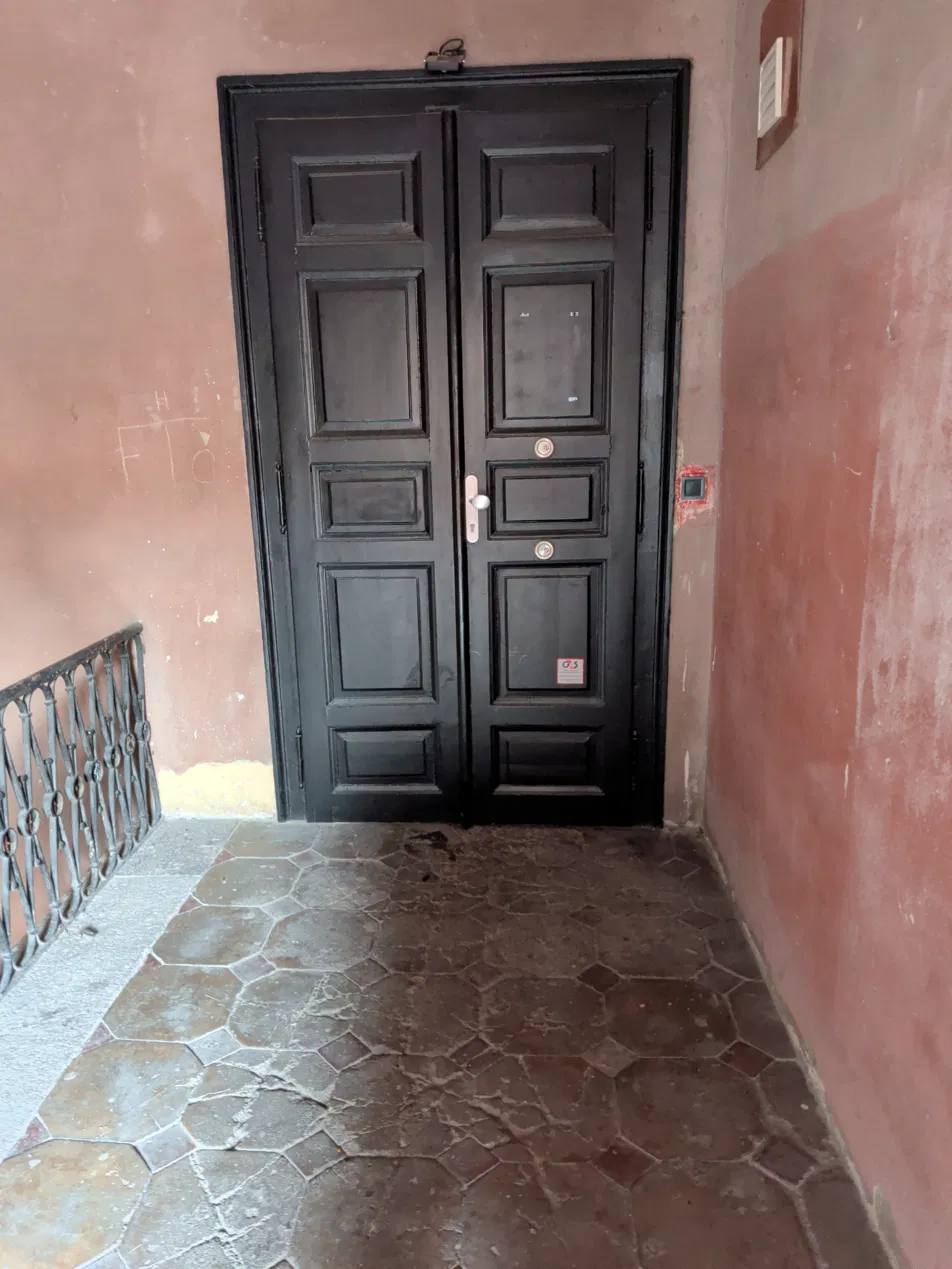
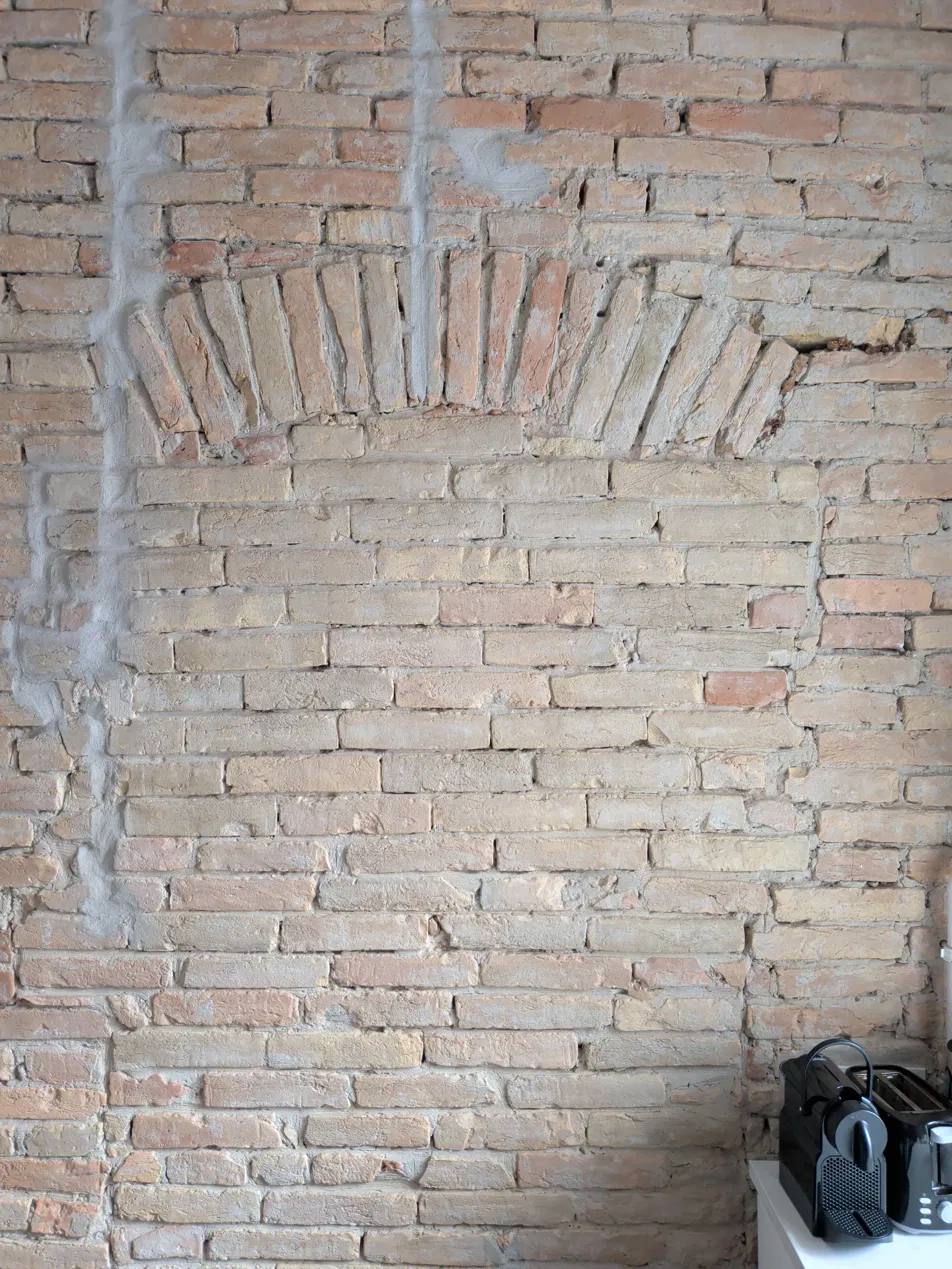
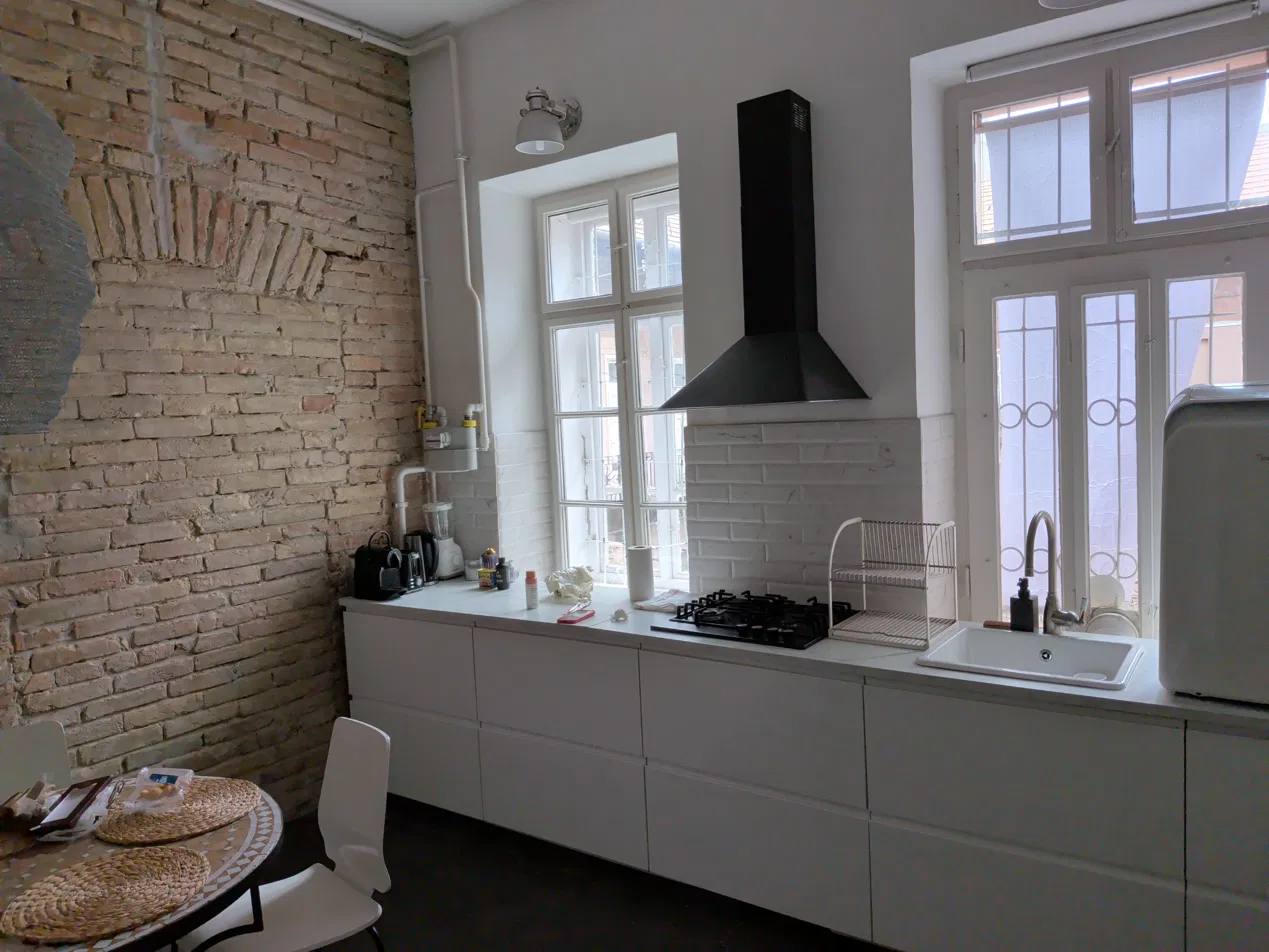
The single best piece of detective work was in the kitchen. Its exposed-brick wall carries a fan of angled bricks — a segmental relieving arch — over an area of infilled brickwork: the original niche where a masonry coal-and-wood range (the sparhelt) once stood, venting up a chimney whose plastered chase still climbs the wall. Beside the sink, a too-tall window marks a former service door that once opened straight from the gallery into the kitchen, so staff, deliveries, coal and ash never crossed the family’s rooms. When the flat was split the opening wasn’t filled in — the old door was simply replaced with a window, and its original door frame still survives around the glass, plainly visible from the courtyard landing just to the right of the rusted metal door that hides the old service stair. The frosted-glass partitions elsewhere stand exactly where the enfilade’s grand double doors used to be.
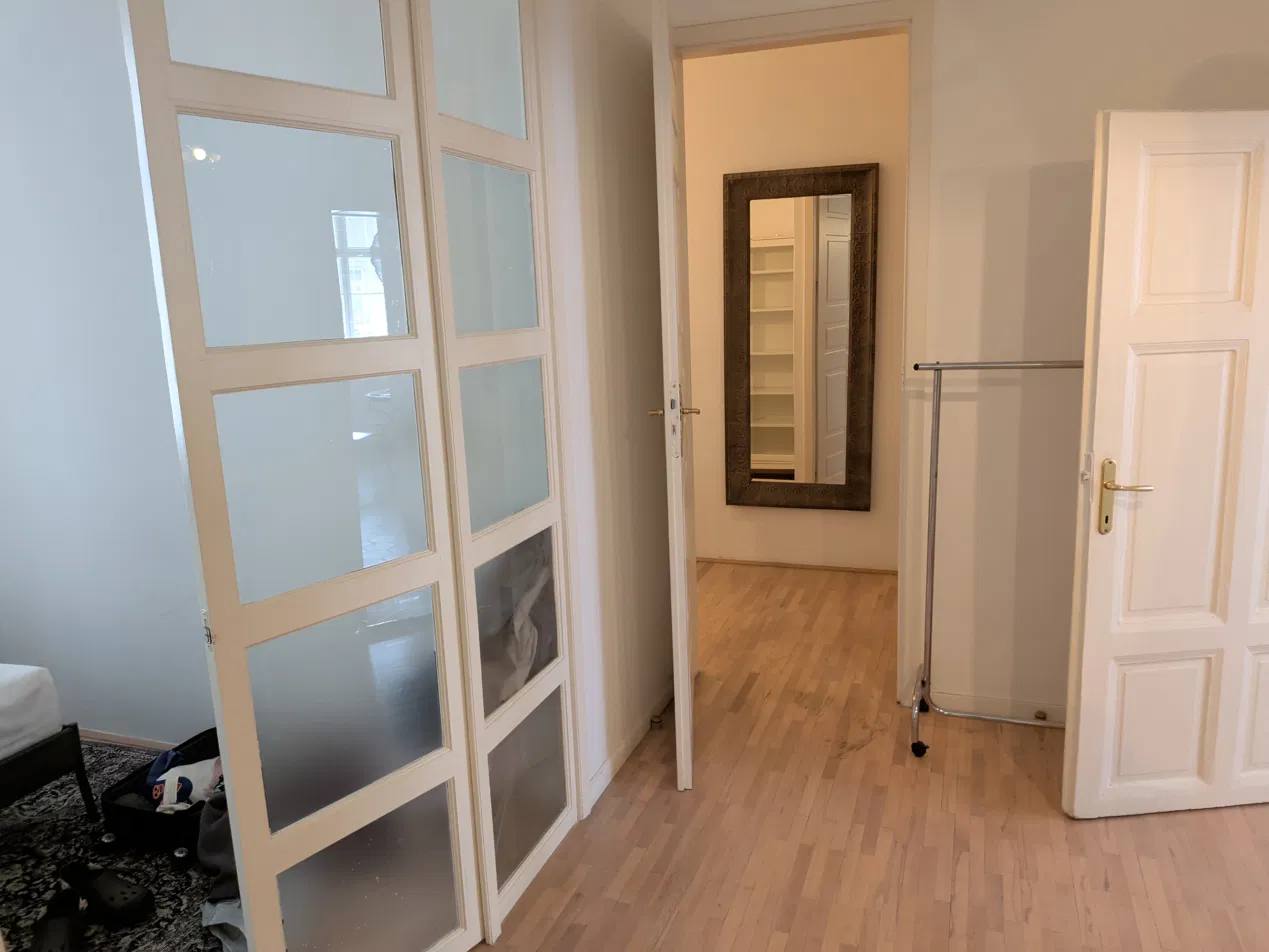
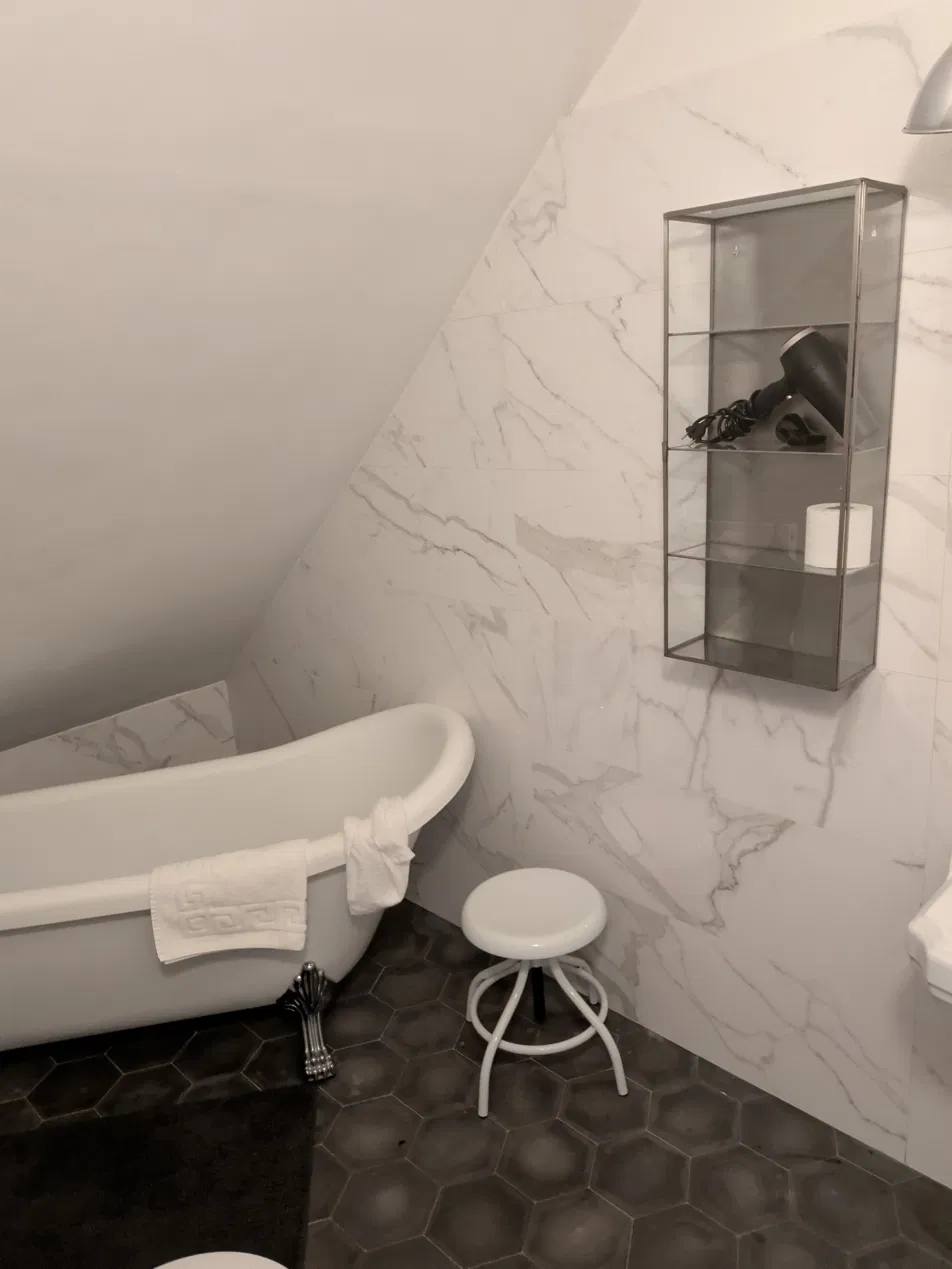
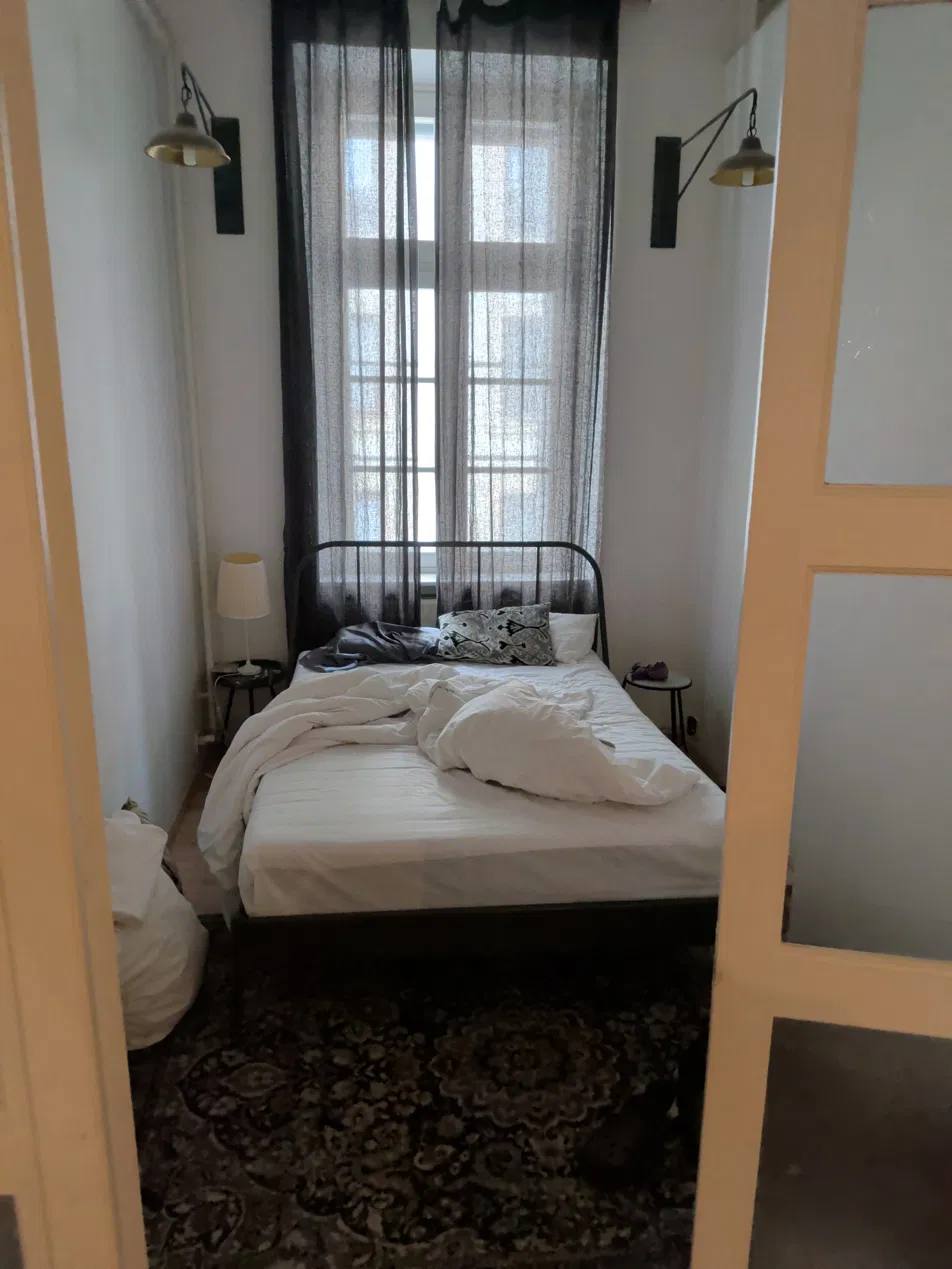
The flat feels salon-heavy and slightly truncated for a reason: it is the street-facing fragment of a larger original apartment. A 2014 measured floor plan of the building shows it carved into roughly 25 separate units per floor, hand-numbered around the courtyard galleries — the fingerprint of grand apartments fragmented into many small dwellings. That fragmentation has a brutal history. In the early 1950s Hungary’s communist state nationalised the vast majority of Budapest’s apartments — some 200,000 units — and parcelled the big bourgeois flats into társbérlet, forced co-tenancies in which several unrelated families shared one former salon-and-enfilade, queueing for a single kitchen and toilet. In May–June 1951 alone, around 12,700 “class-alien” Budapesters were deported from their flats to the countryside so workers could be moved in. The rooms where this flat’s children and maid once slept — on the courtyard service side, reached by a back stair now sealed behind a rusted, locked metal door — were split off into the neighbouring unit in just such a subdivision. After 1989 the units were privatised; more recently this half was polished into a two-bedroom short-term rental, its modern marble baths and glazed partitions inserted into the old bones. The beds we couldn’t account for had been behind that locked door all along.
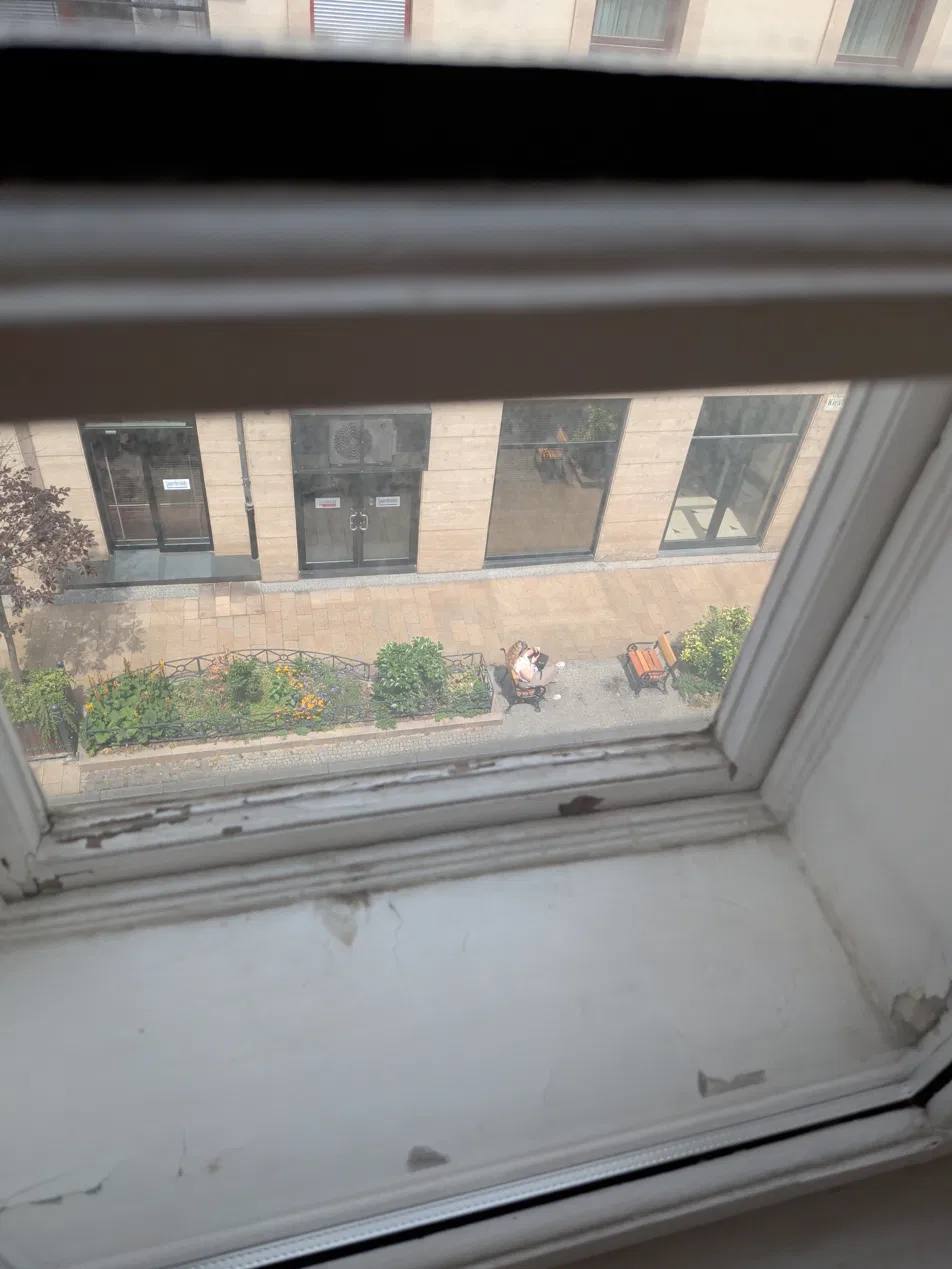
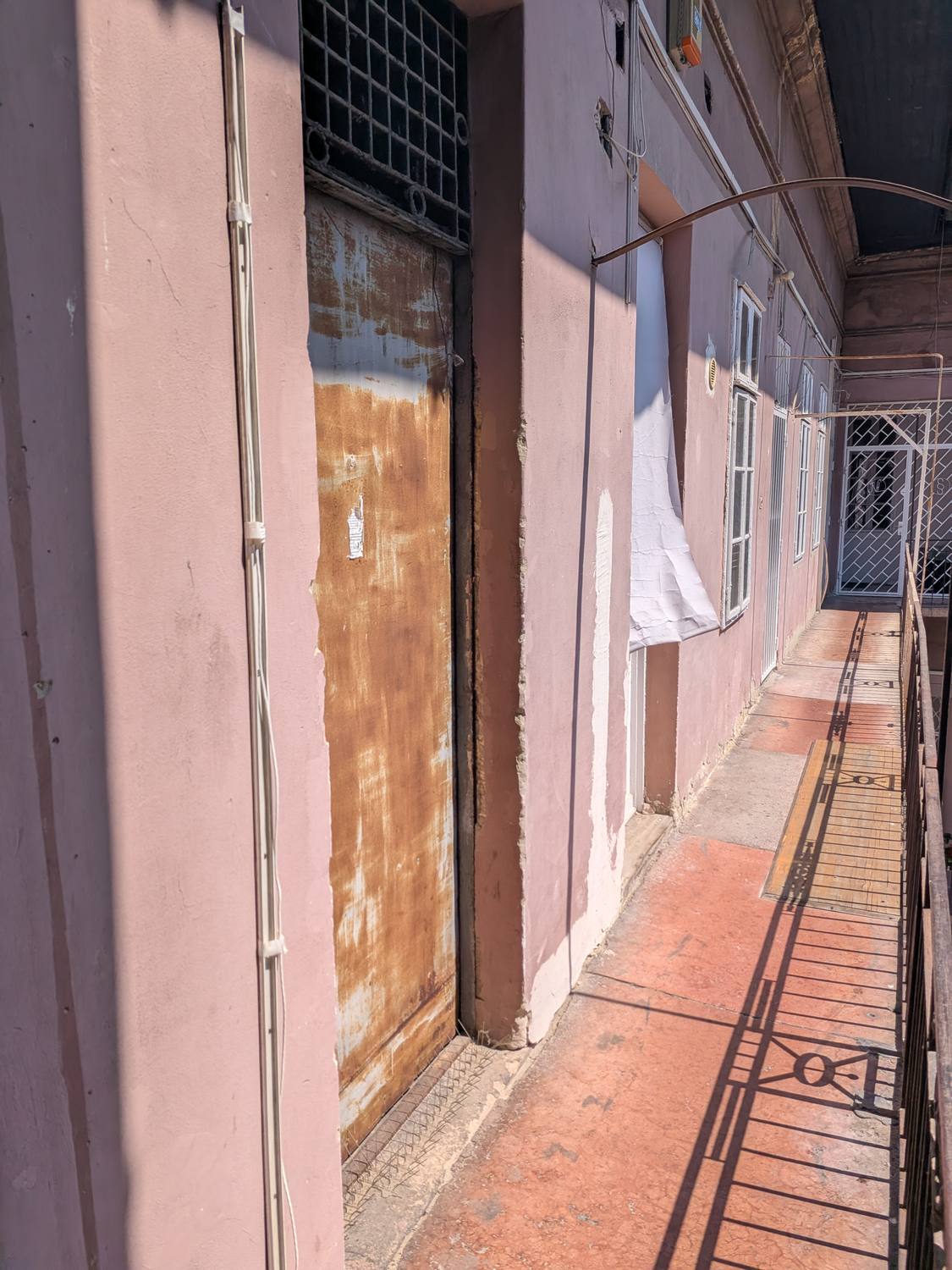
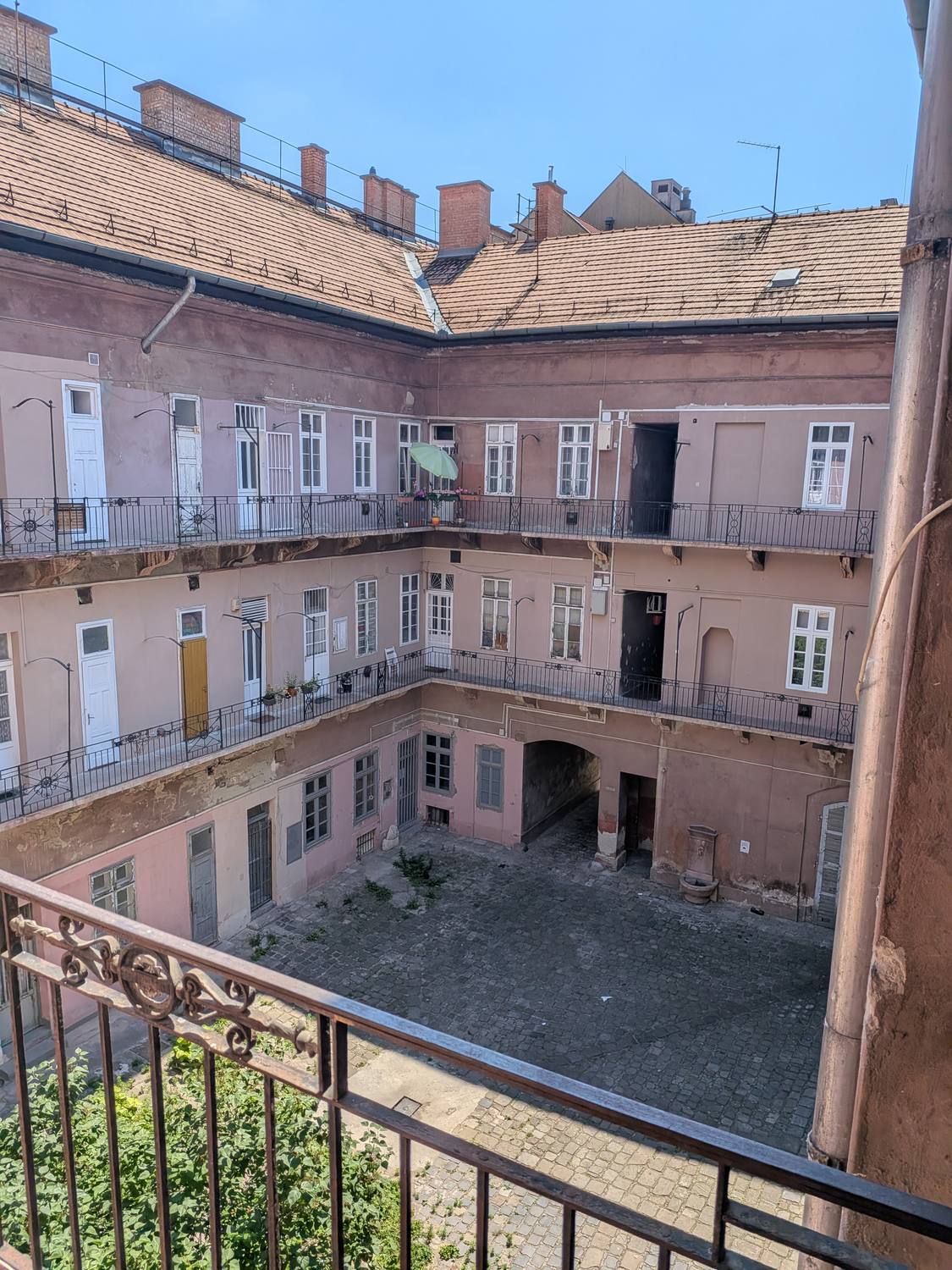
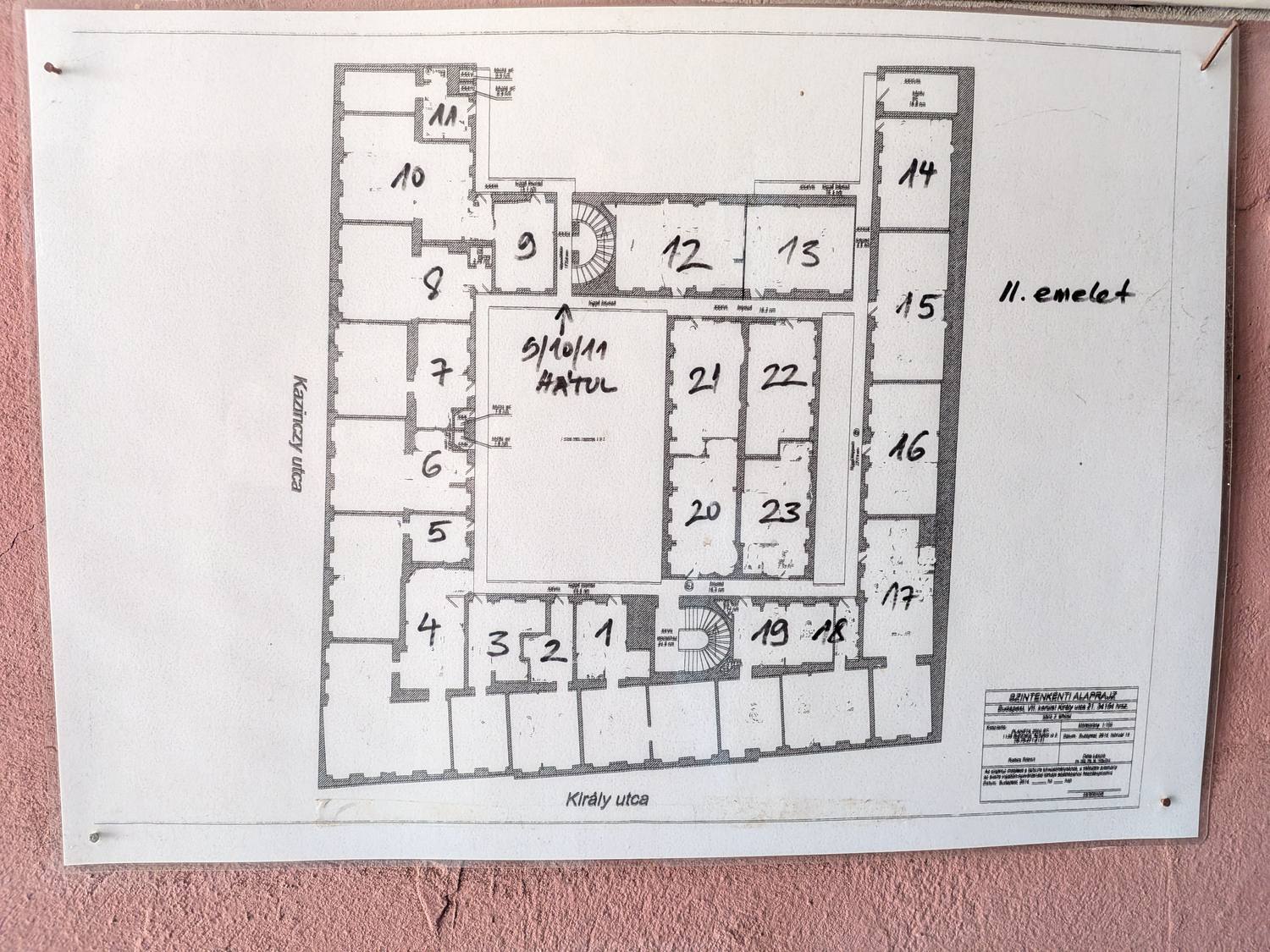
A note on certainty: the room-by-room reconstruction above is informed inference, read from the building’s own brickwork, doorways and sealed openings against the standard pattern of a Budapest bérház, plus that 2014 plan.
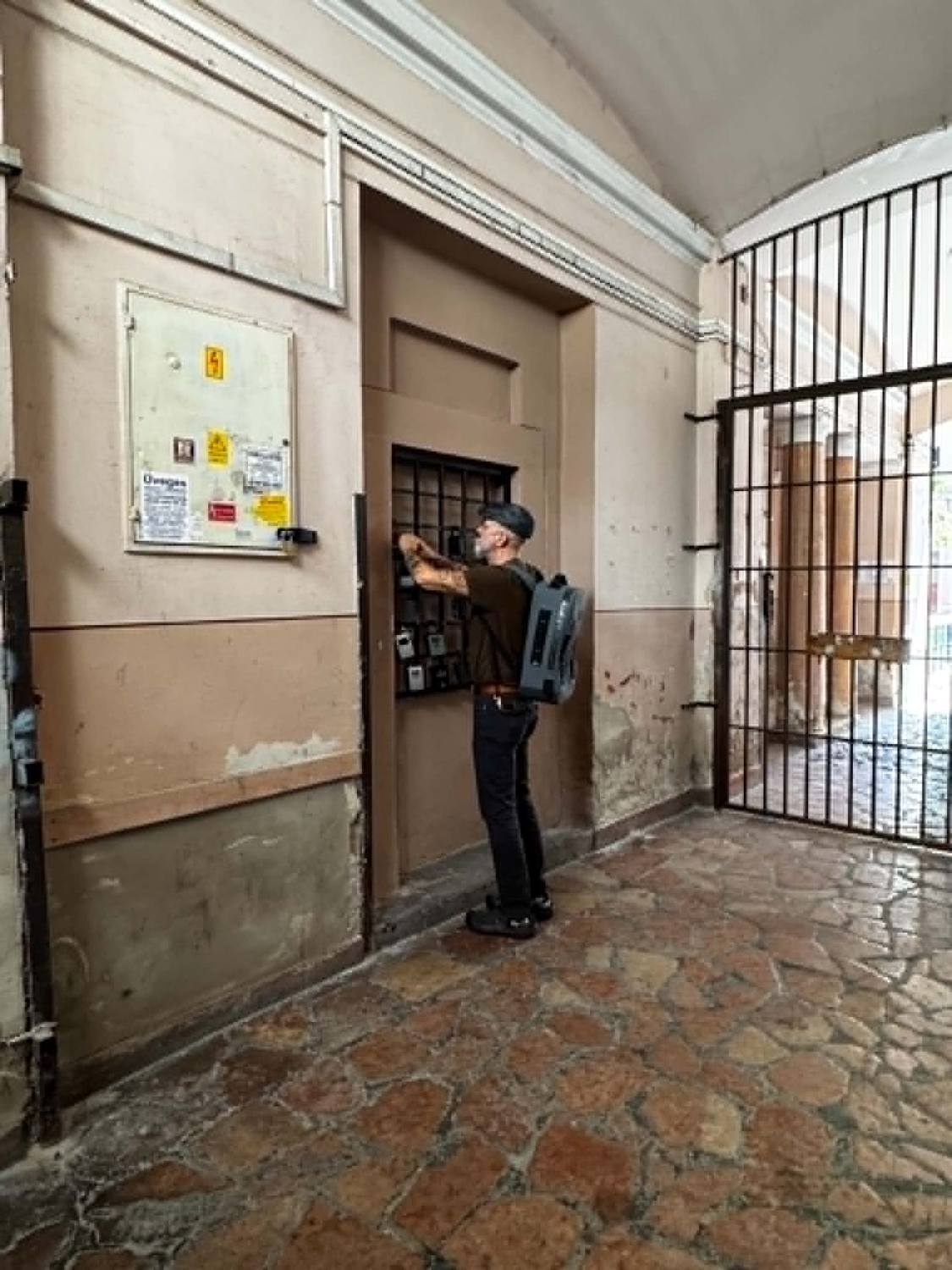
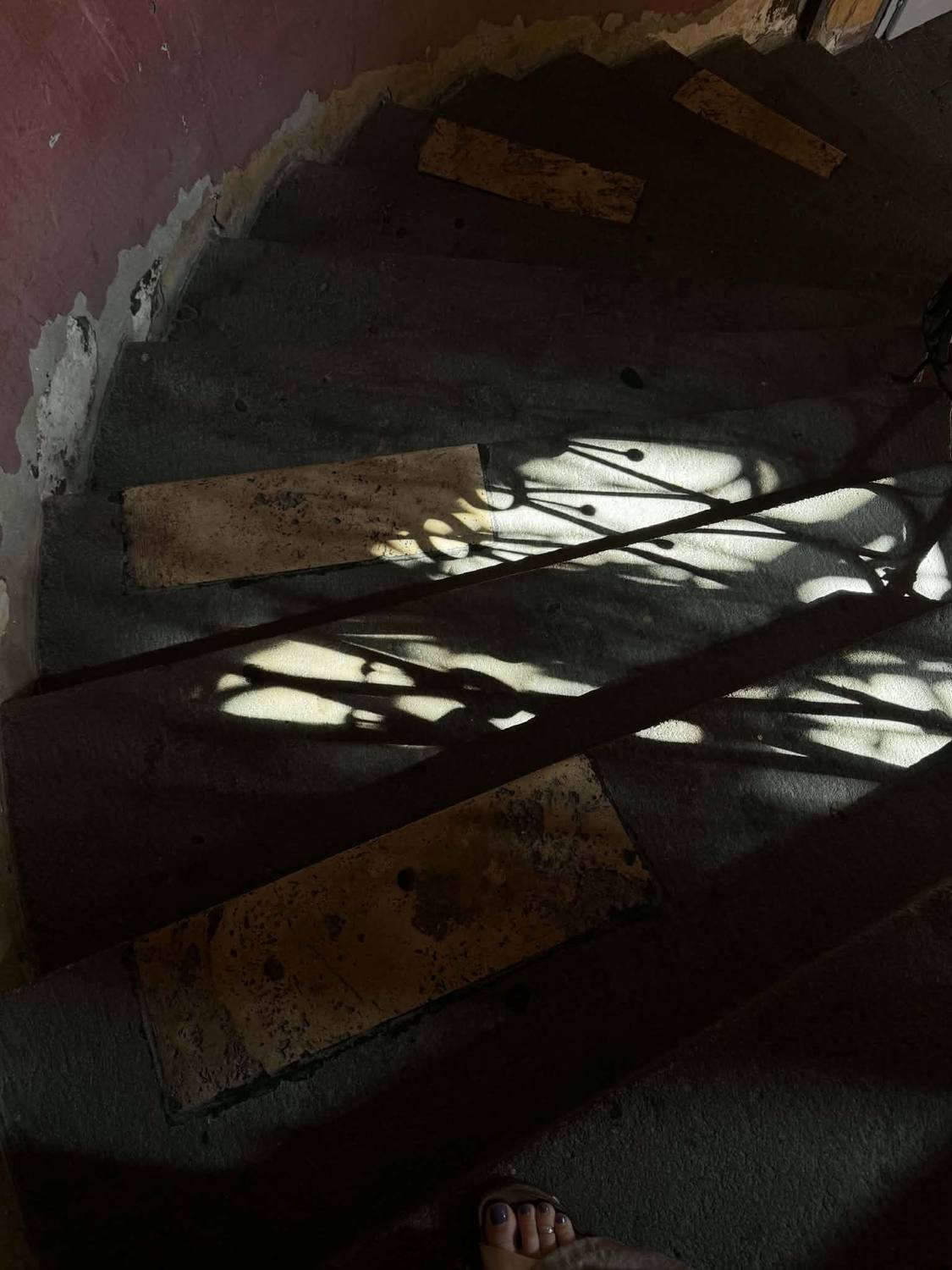
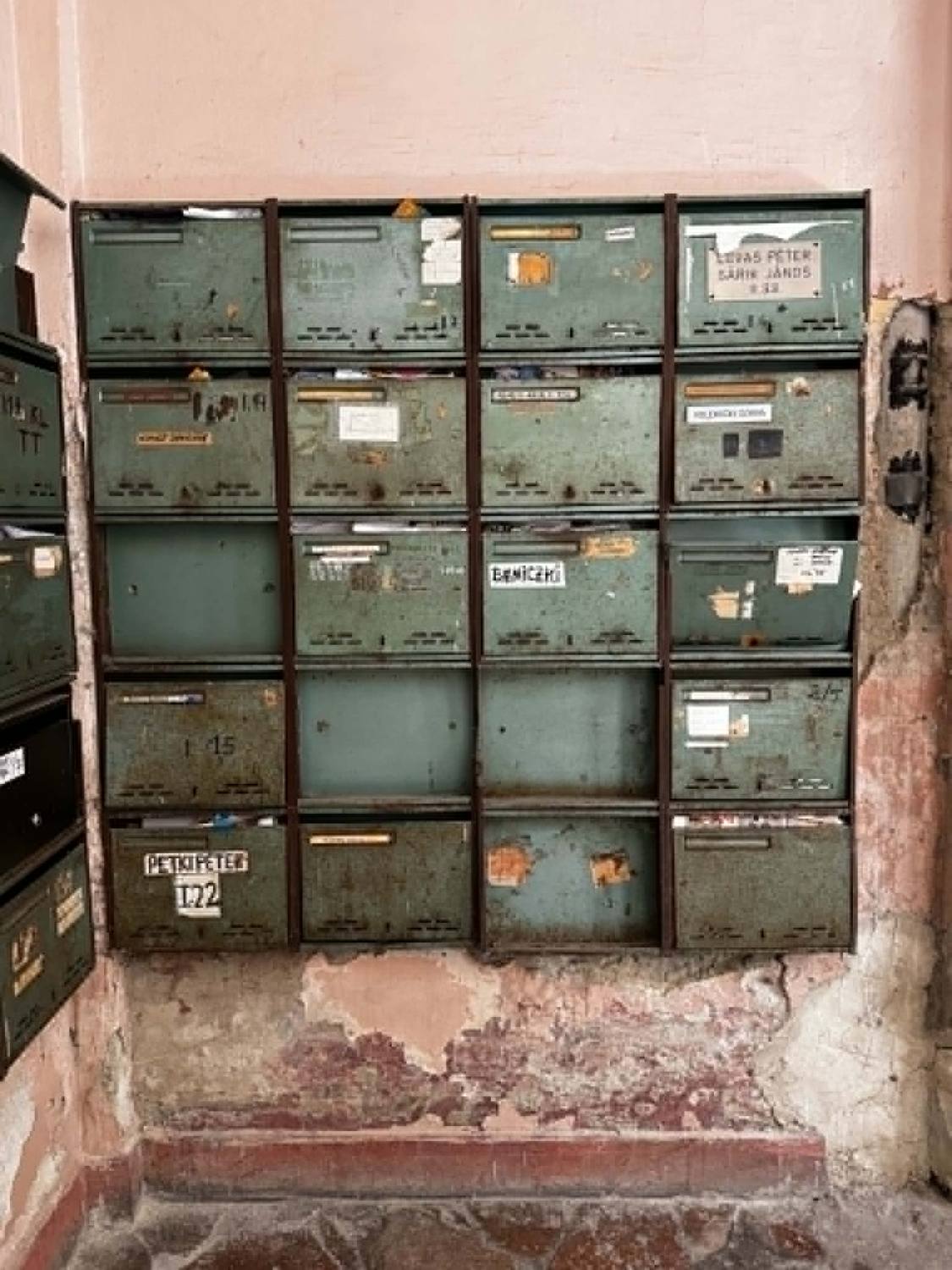
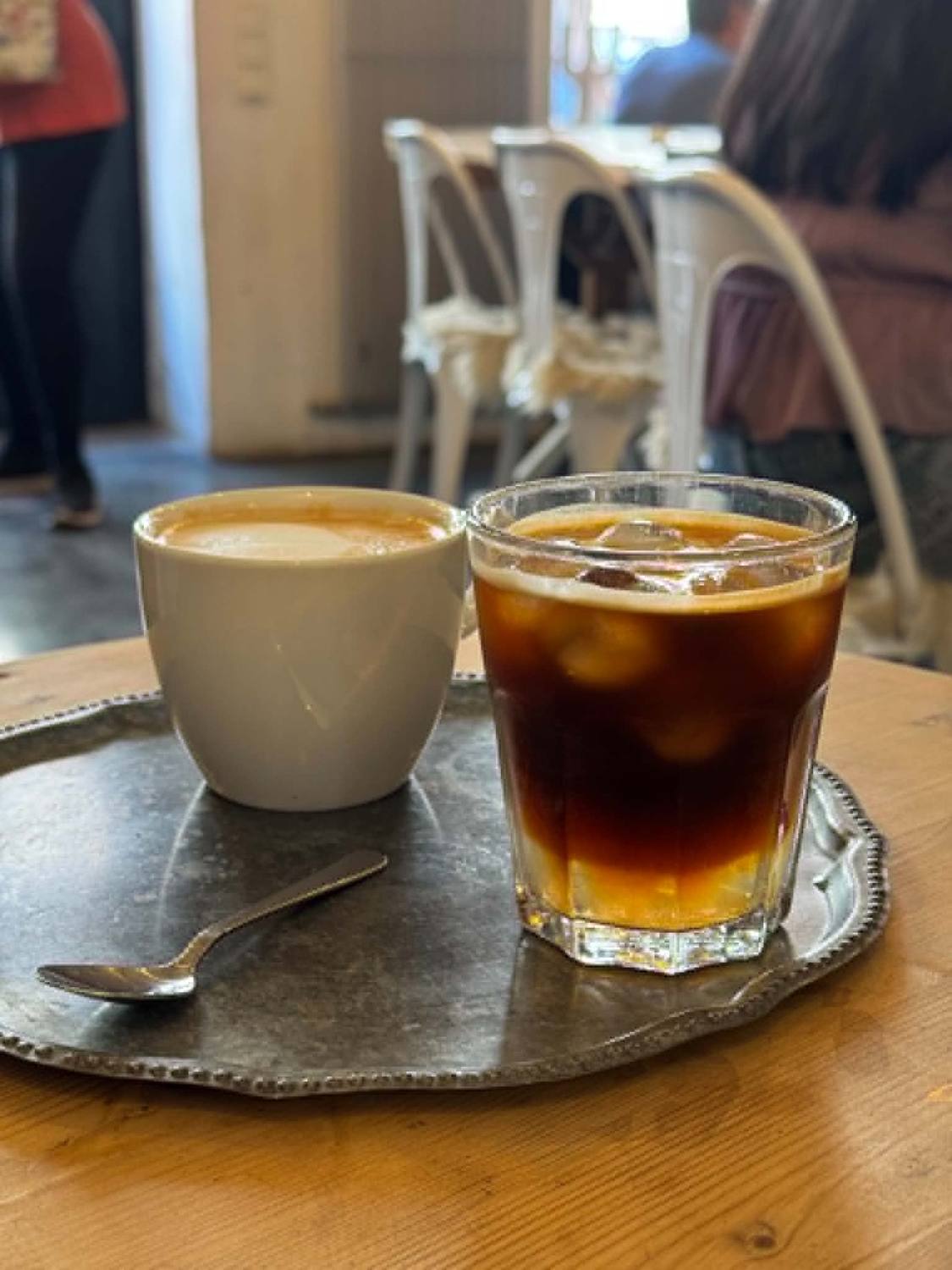
Every day began and ended at the same threshold — in through the iron gate off Király utca, across the courtyard past a wall of old letterboxes, and up the winding stair. And every single morning started a few doors down at Goamama, the little café right on our block that became an unshakeable habit by day two.
Our first full day was a single long, looping walk that climbed clear out of Pest and into the storybook half of the city. We drifted west off Király utca in the afternoon, paused on the embankment, and then crossed the river on the most famous bridge in Hungary.
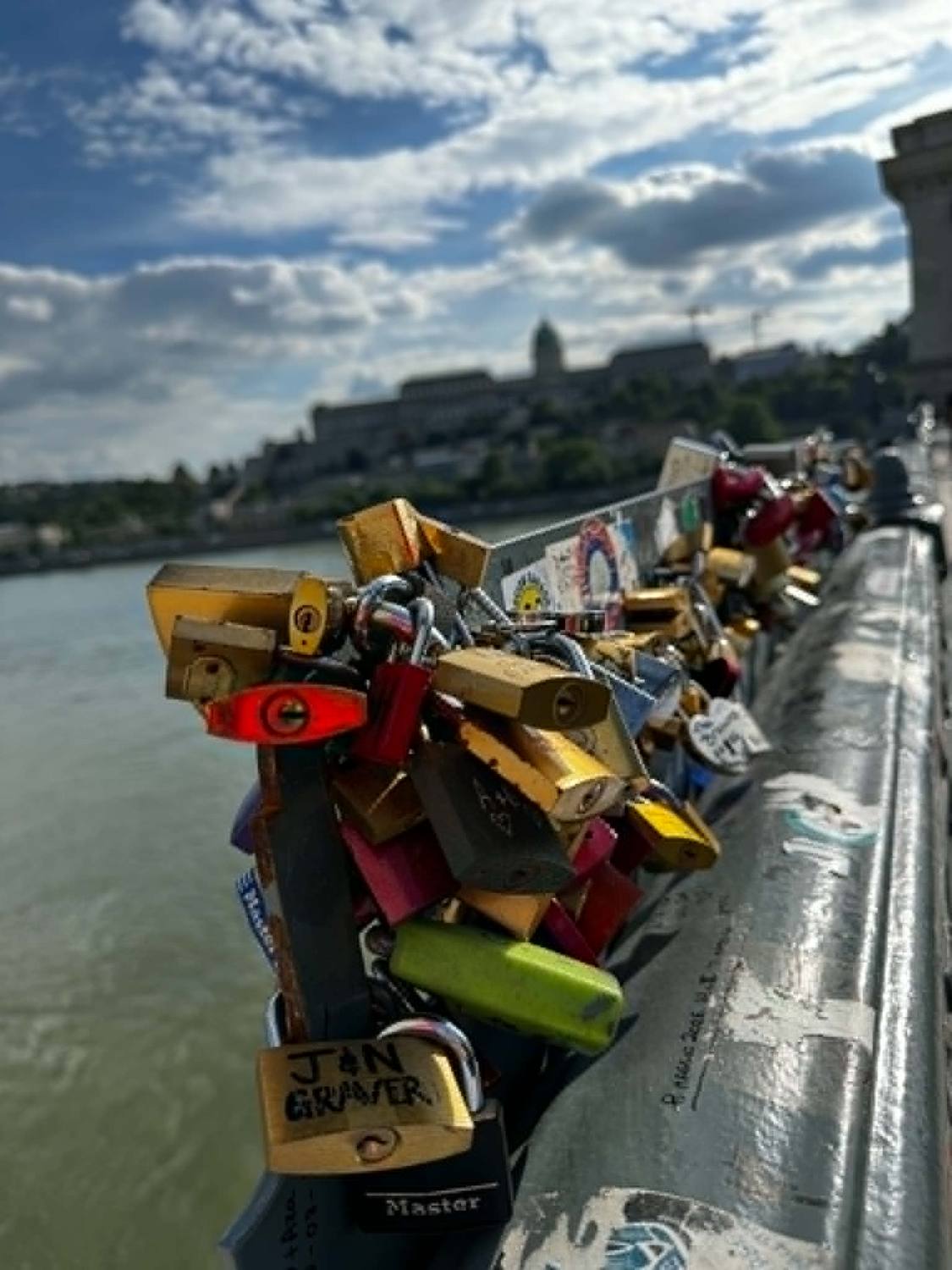
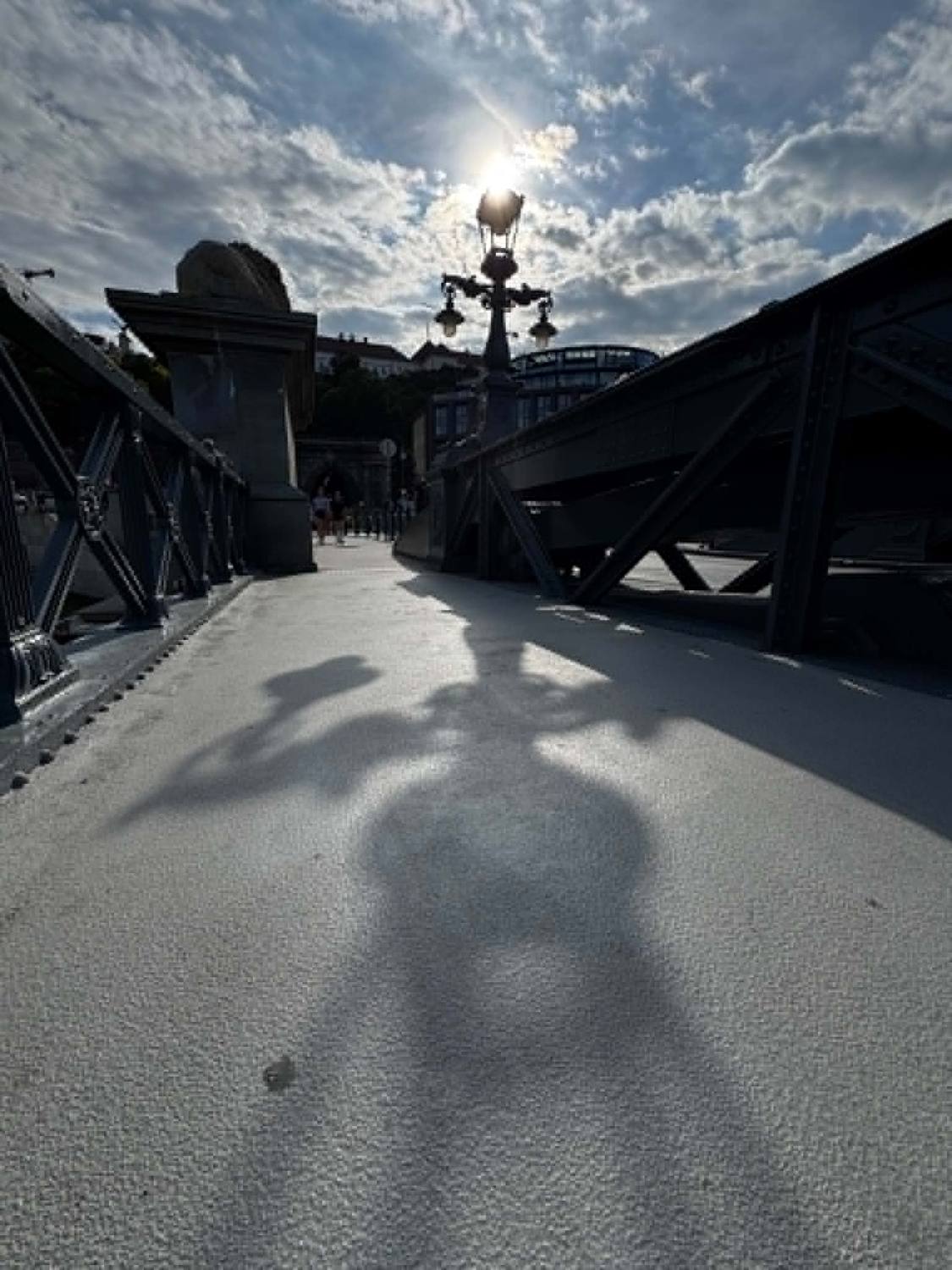
The Chain Bridge — Séchényi Lánchíd — was the first permanent bridge ever to join Buda and Pest when it opened in 1849, the pet project of Count István Széchenyi and the English engineer William Tierney Clark. Blown up by the retreating Wehrmacht in 1945 and rebuilt within four years, it is still the city’s ceremonial spine. We crossed it on foot toward the Buda hills.
Rather than grind straight up the hill, we did the thing you should do exactly once: rode the little wooden cable cars of the Buda Castle Funicular. It is a genuine antique — opened on 2 March 1870, only the second funicular in Europe after Lyon, dreamed up by Ödön Széchenyi (son of the man who built the bridge below it). A bomb destroyed it on 20 December 1944; it sat in ruins for four decades and only reopened in 1986. Two counterbalanced cars climb the short, steep cut from Clark Ádám tér to the castle, and for ninety seconds you watch the rooftops drop away through the glass.
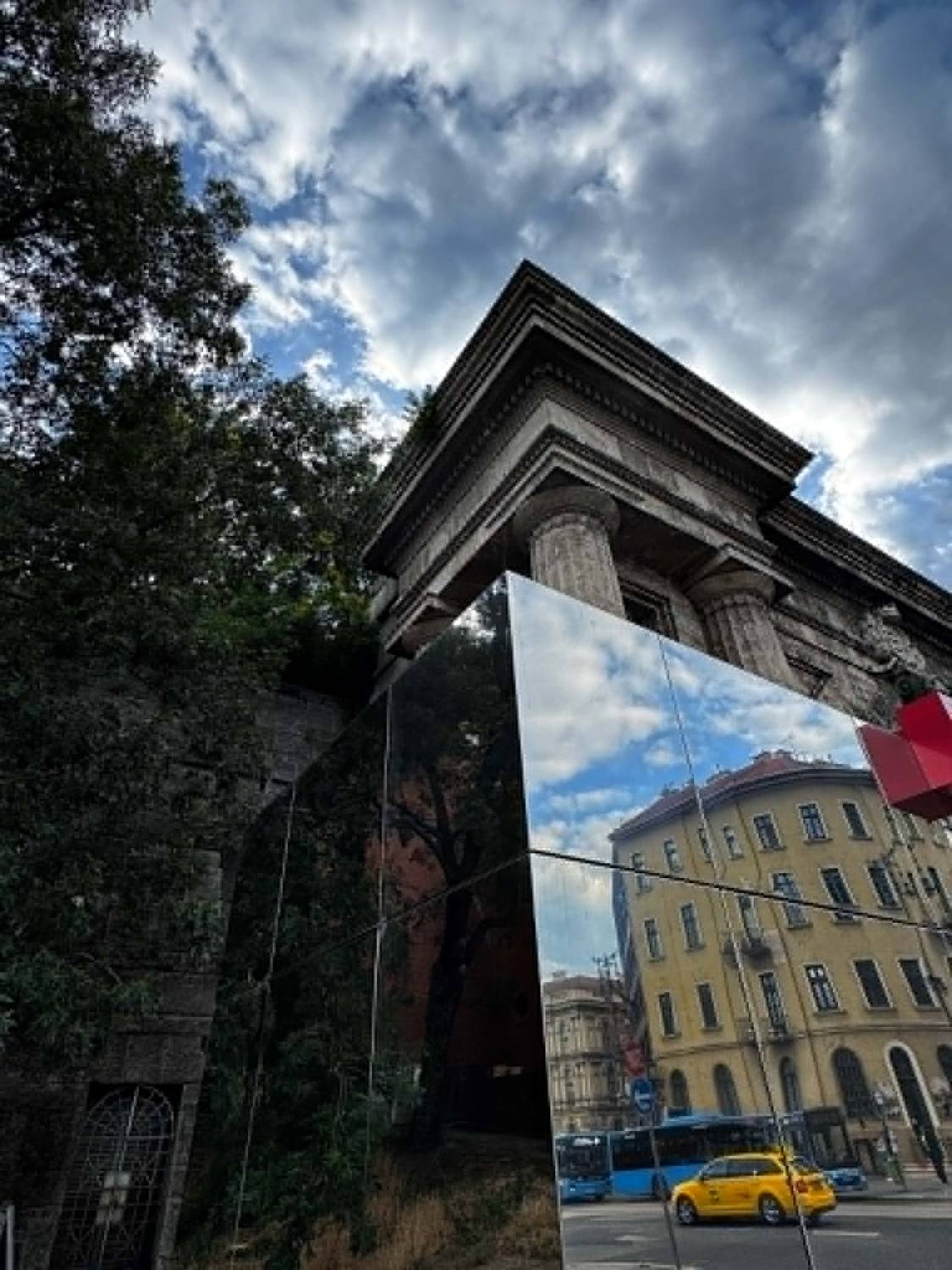
The funicular’s lower station sits on Clark Ádám tér, the little square at the Buda foot of the Chain Bridge, named for the Scottish engineer Adam Clark who supervised the bridge’s building — and who then drove the Buda Castle Tunnel straight through Castle Hill right behind it. The two match so neatly that Budapesters joke the tunnel is just where they keep the bridge when it rains. The mirror-clad cube beside the portal in our photo is one of the Buda Castle Infopoints — a Hello Wood × BLOKK design dotted around the Castle District — and it does a trick of its own, throwing the whole square back at you: a yellow taxi, a city bus, the curved Lánchíd Palota across the way.

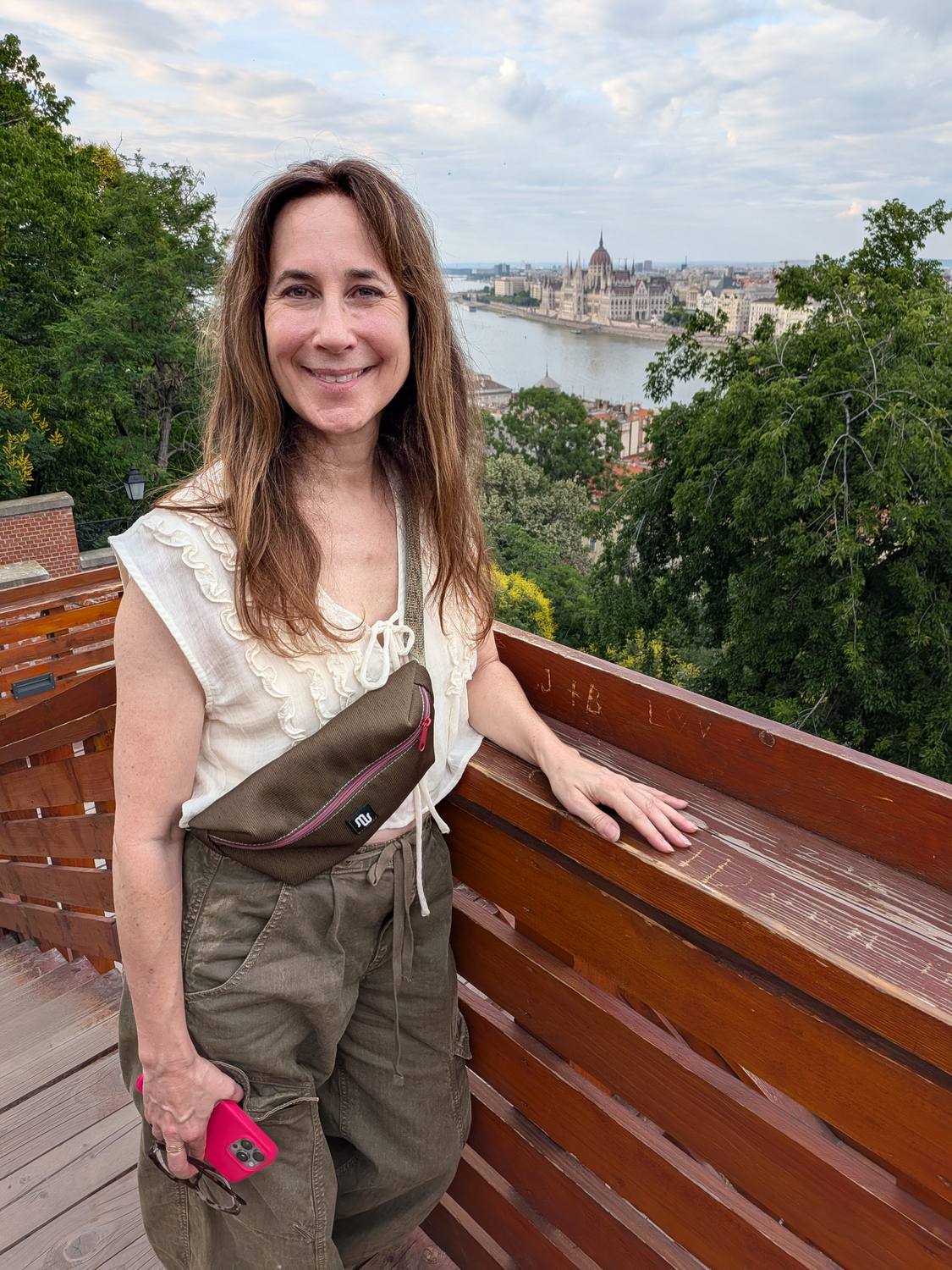
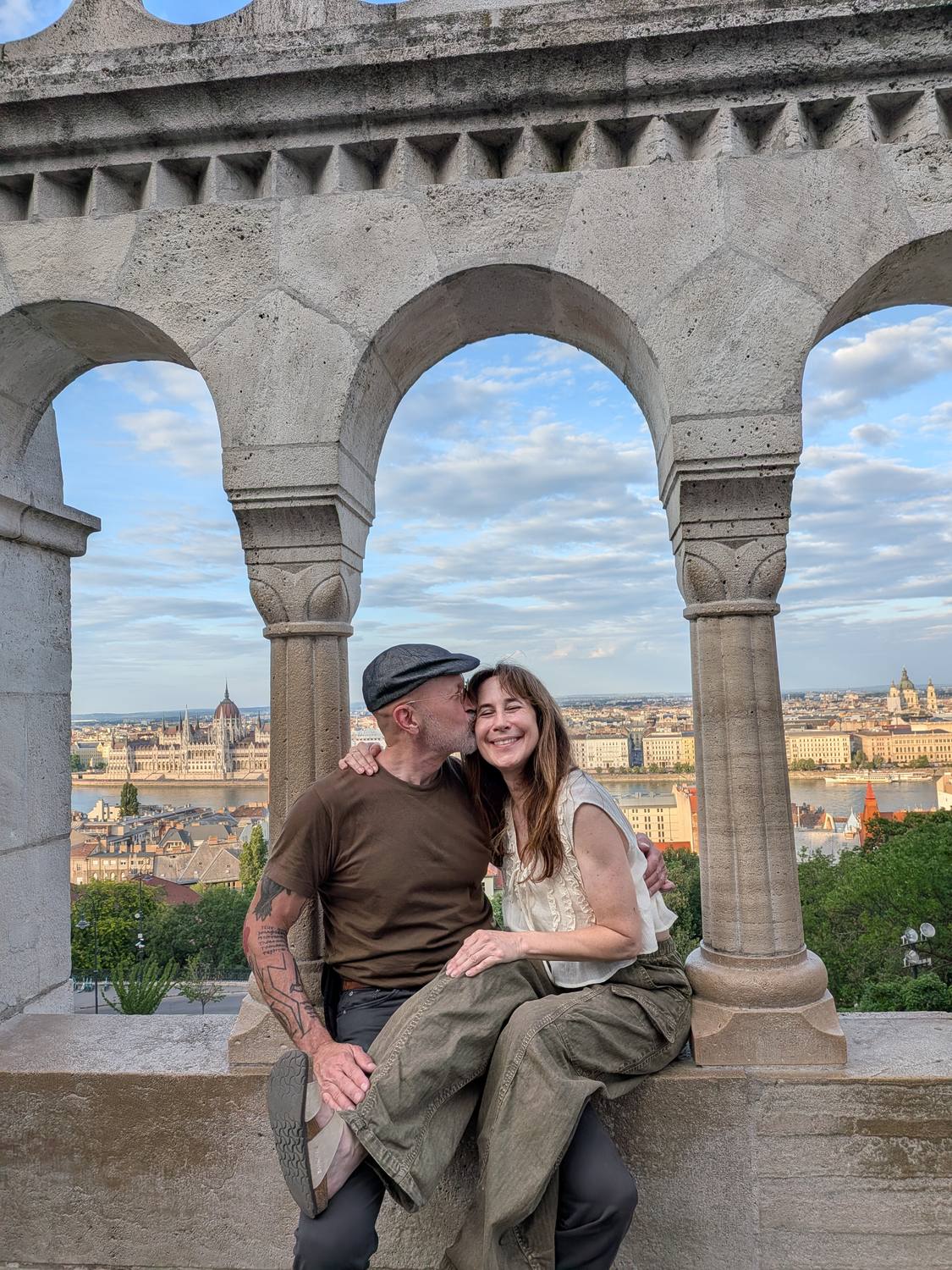
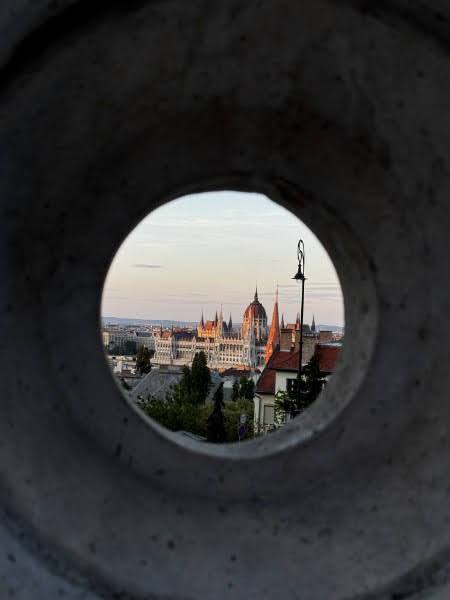
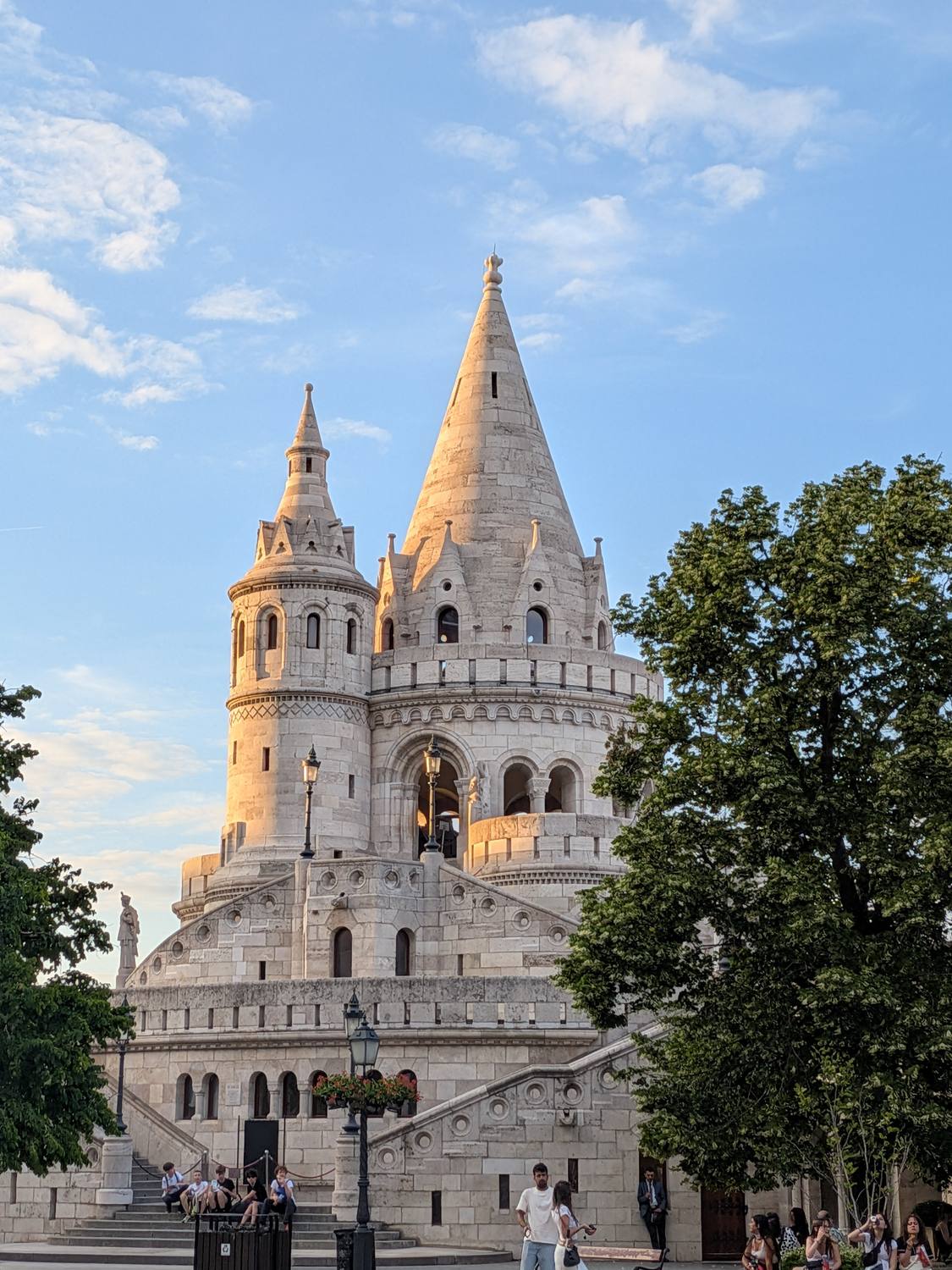
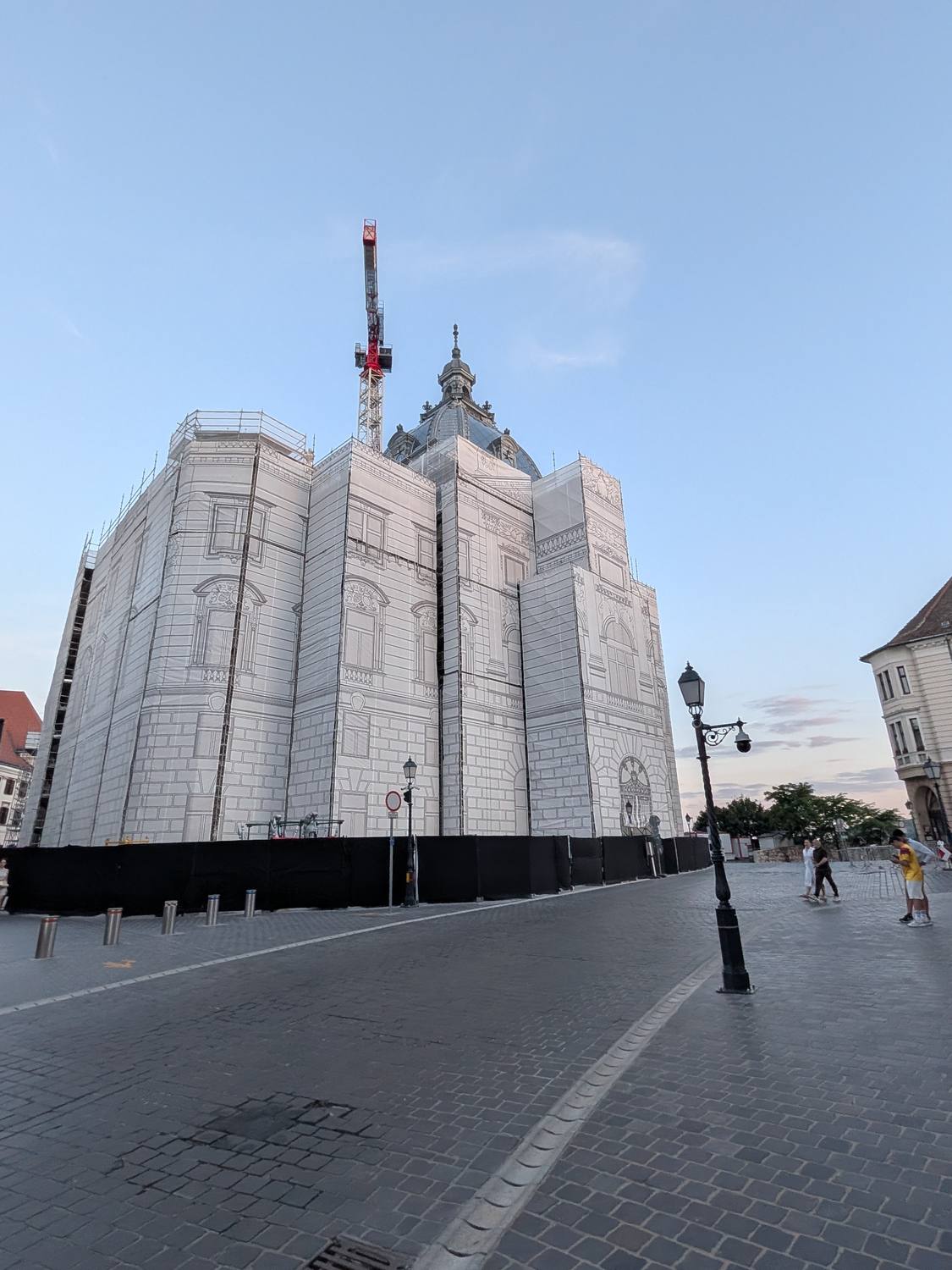
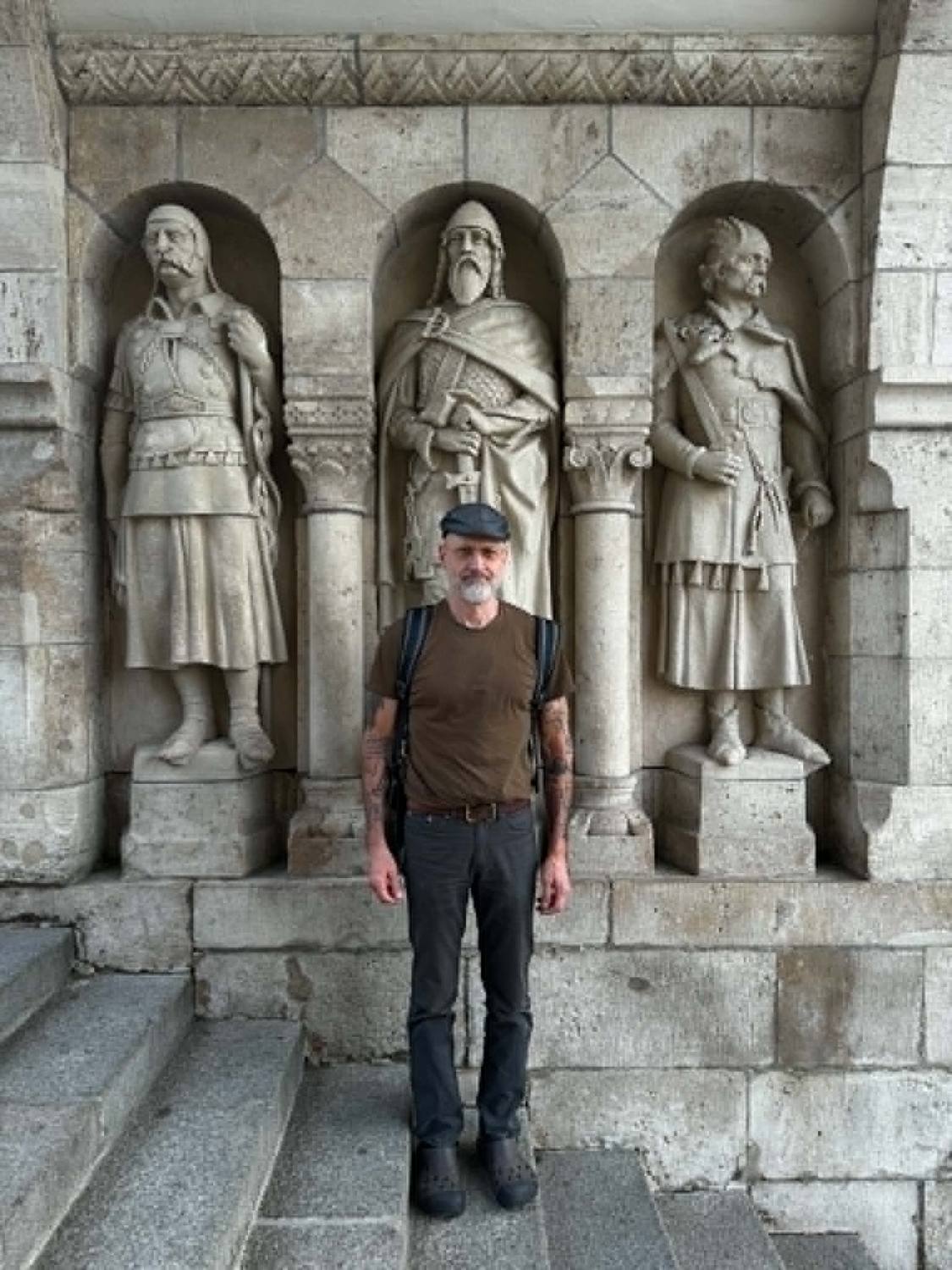
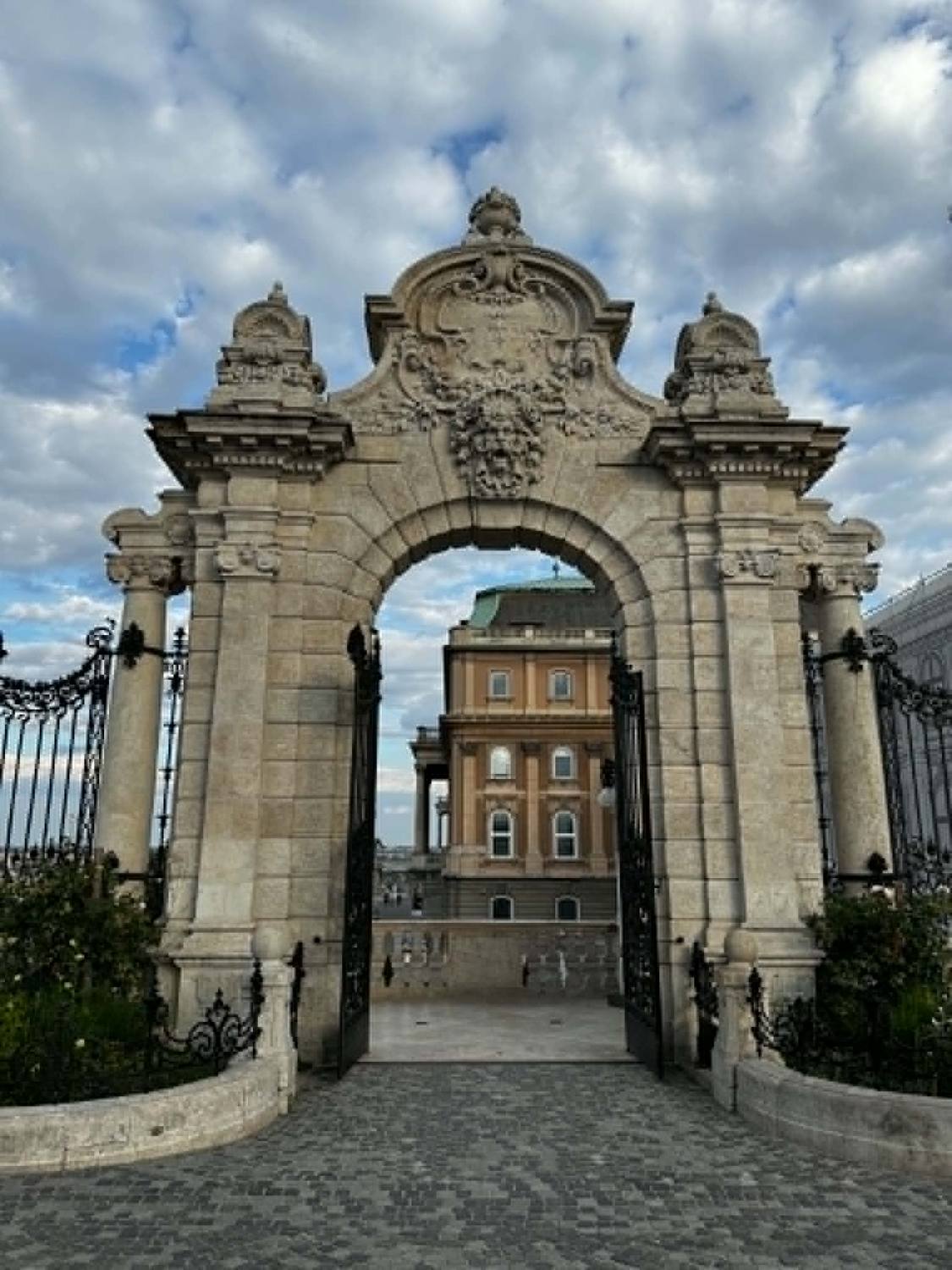
Up top, the reward: Fisherman’s Bastion. Despite the fairy-tale battlements it was never a fortress — it’s a purely ceremonial viewing terrace built 1895–1902 by Frigyes Schulek, who also restored the Matthias Church next door. Its seven high, conical towers stand for the seven Magyar chieftains who founded Hungary in 895, their tent-like shape a deliberate nod to the nomads’ encampments; the name remembers the medieval guild of fishermen who defended this stretch of wall. From its arches the whole of Pest unrolls gold and blue, Parliament dead ahead across the water.


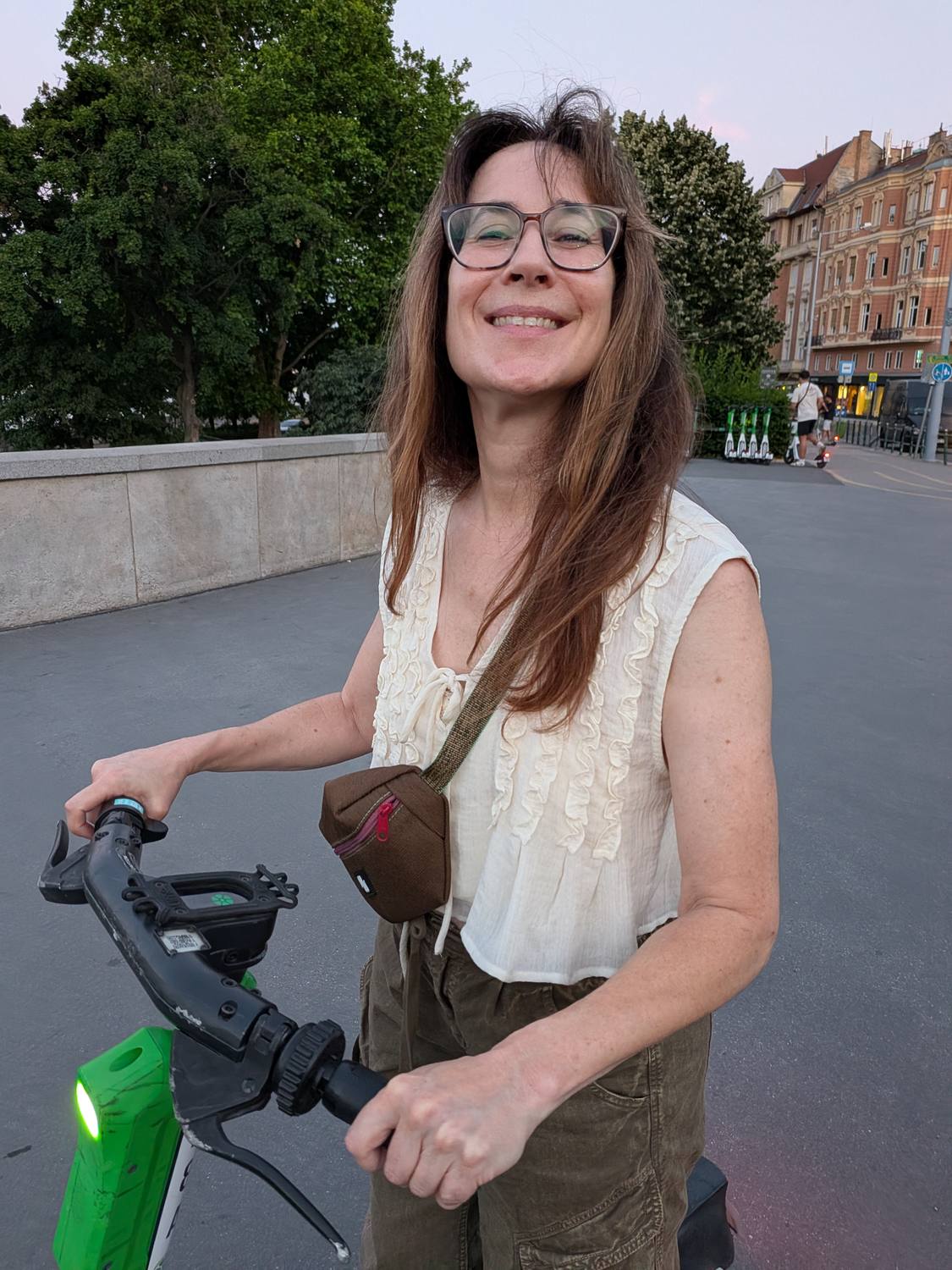
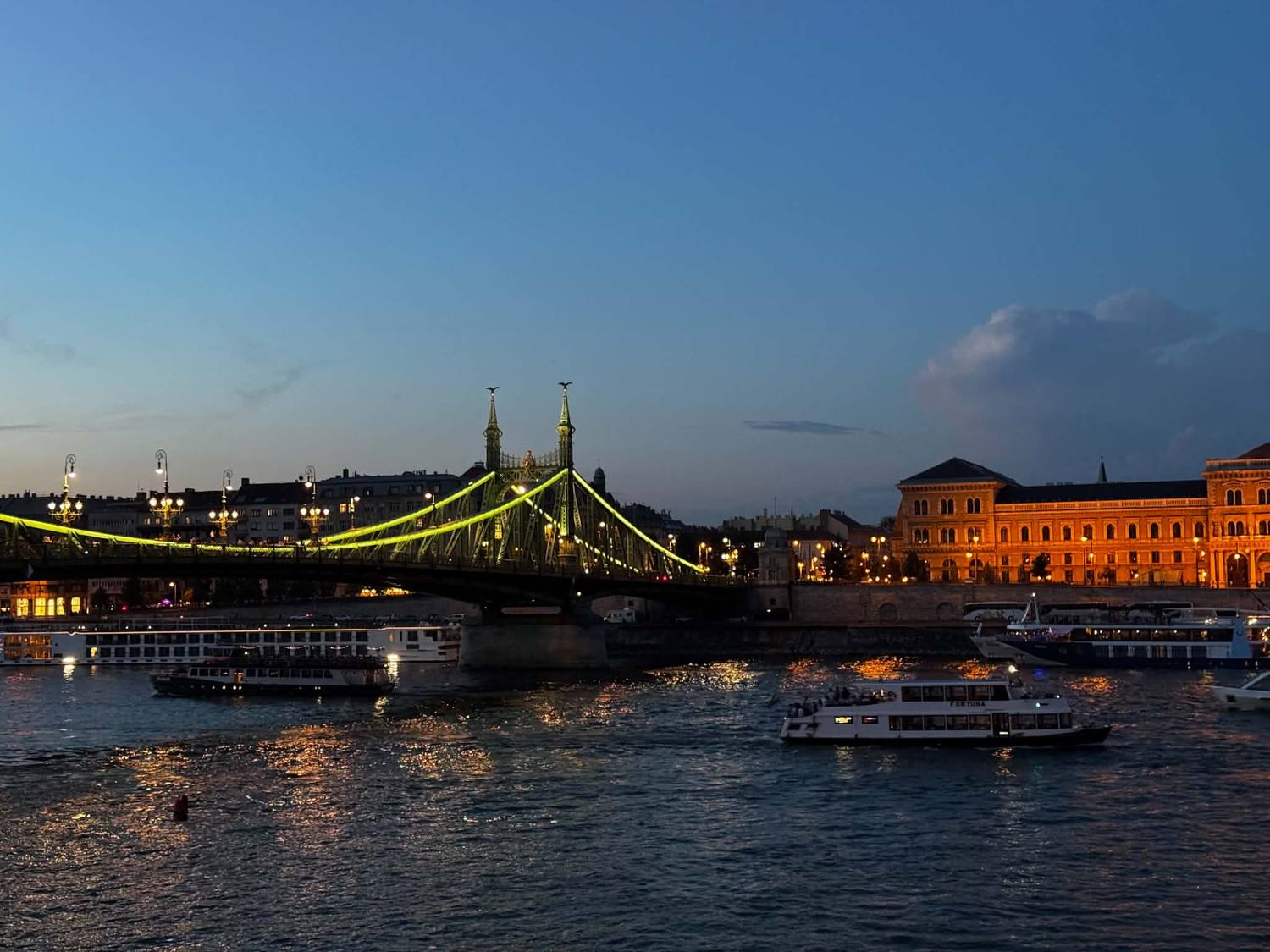
For the trip home we did not walk. We unlocked two Lime e-scooters and flew back down to the river and across the Chain Bridge into the lit-up centre — the first of three scooter runs we’d rack up that week (full tally further down). The bridge at that hour, half-empty, the lamps just coming on, is one of those five-minute stretches of a trip you keep replaying.


Friday had a shape to it: an afternoon of the Jewish Quarter’s wonderful secondhand shopping, a long pre-wedding dinner cruise on the Danube with the whole crew, and — because the calendar was kind — a birthday that spilled into the small hours at the original ruin bar.
District VII is the secondhand capital of Budapest, and we worked two of its best. At Retrock — the biggest vintage-and-designer store in the city, tucked into Anker köz just off Király utca — Dave found the score of the trip: a Hugo Boss jacket and a purple shirt that turned out to be exactly the right armour for that night’s boat party. A few doors on, Lollipop Factory 2.0 threw its usual burst of colour at us.

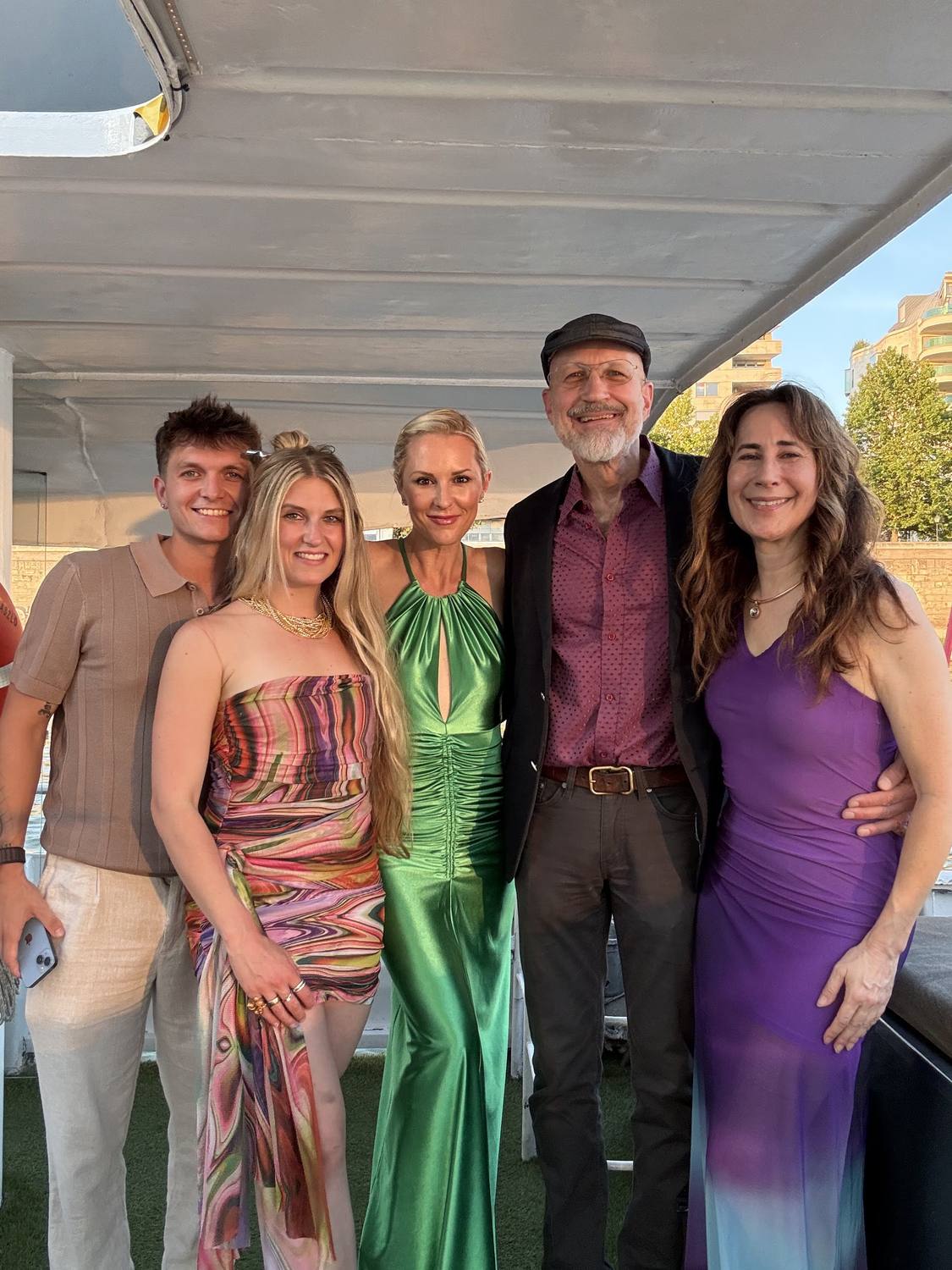
At dusk the cast assembled at Dock 42 on the Pest embankment for the pre-wedding dinner cruise: Rebecca, in emerald; Dallas and Abby; the two of us. The boat pushed off into the long northern twilight with a full dinner, a live band, and a pair of dancers in head-to-toe Hungarian folk costume spinning between the tables — all while the floodlit Parliament slid past on the bank like a jewel box on a shelf.

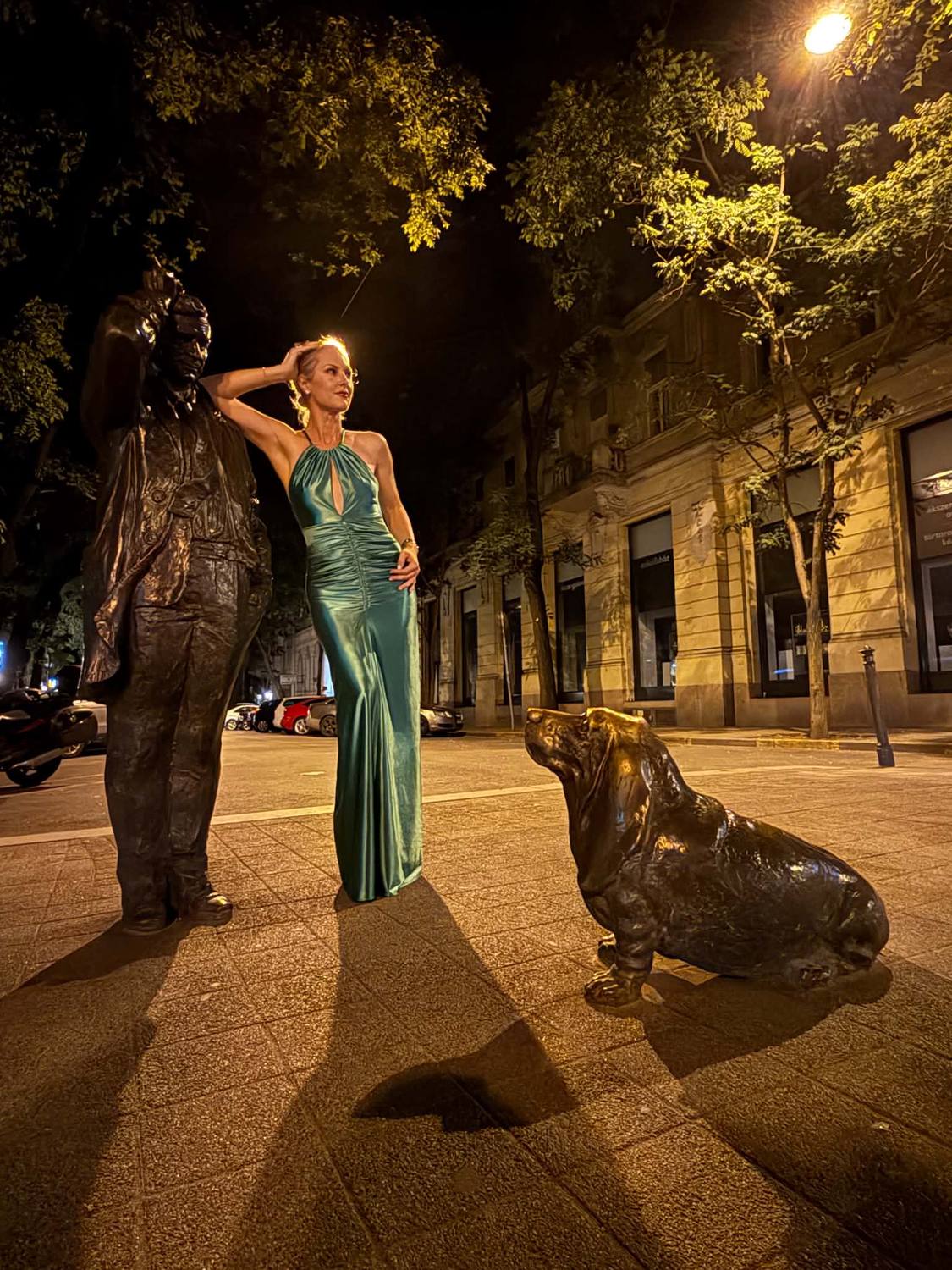
Back on dry land the night meandered. On Falk Miksa utca, an antique-dealers’ street near Parliament, we stopped at the city’s cheekiest statue: a bronze Lieutenant Columbo, rumpled raincoat and basset hound and all, planted there because Peter Falk was reputed to descend from Miksa Falk, the 19th-century statesman the street is named for.


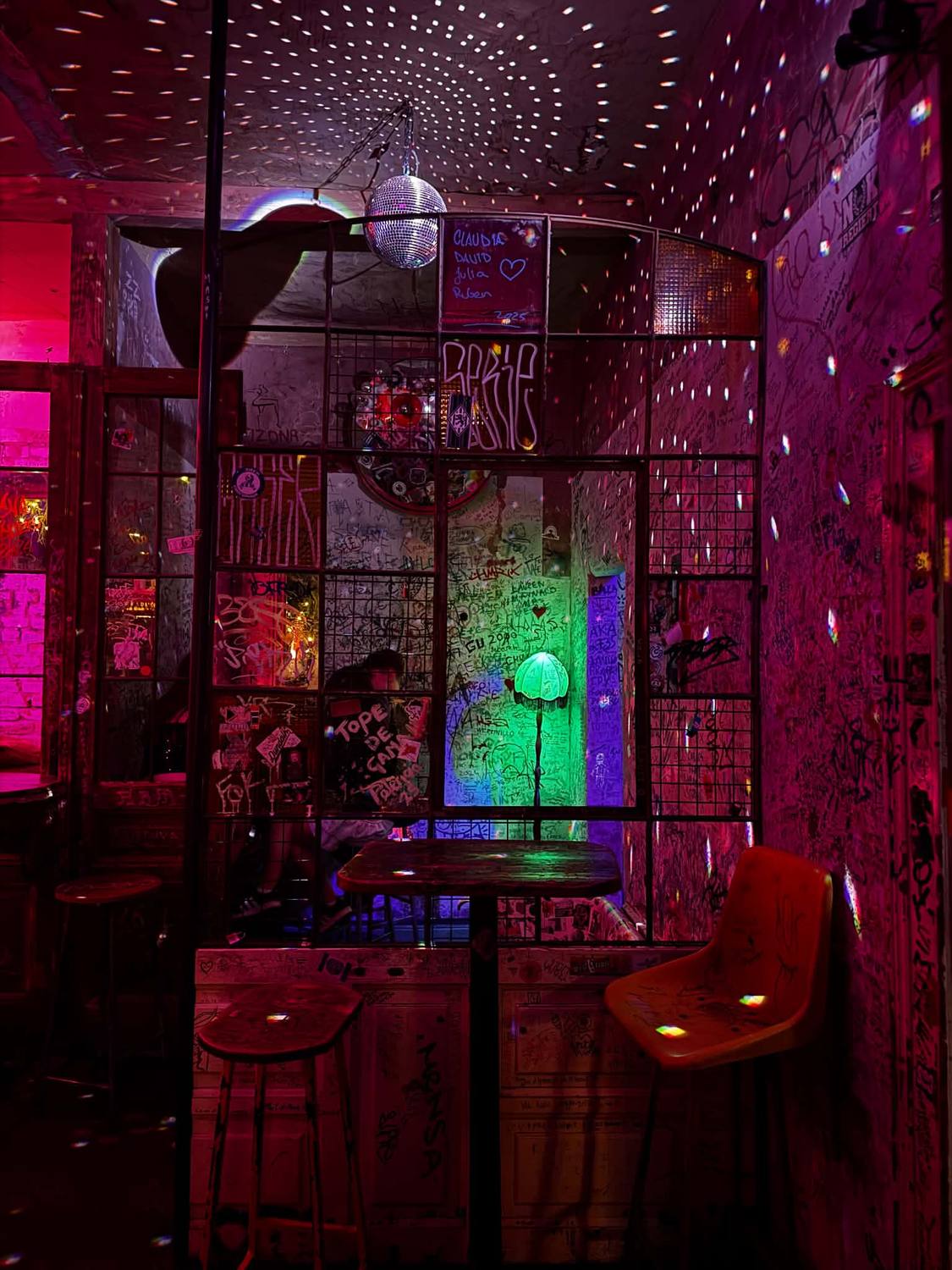
The night wasn’t done. We carried it off the boat and around the corner to Szimpla Kert — the ruin bar, the one that started the whole genre — to celebrate Dave’s birthday under its tangle of fairy lights, mismatched junk-shop furniture and that famous half-a-Trabant. Szimpla opened in 2002 and in 2004 took over this derelict stove factory at Kazinczy utca 14 that was slated for the wrecking ball; two decades on it’s a Jewish-Quarter institution — farmers’ market by Sunday morning, glorious chaos by Friday night. We toasted, the colored lights swung, and the birthday tipped past midnight.

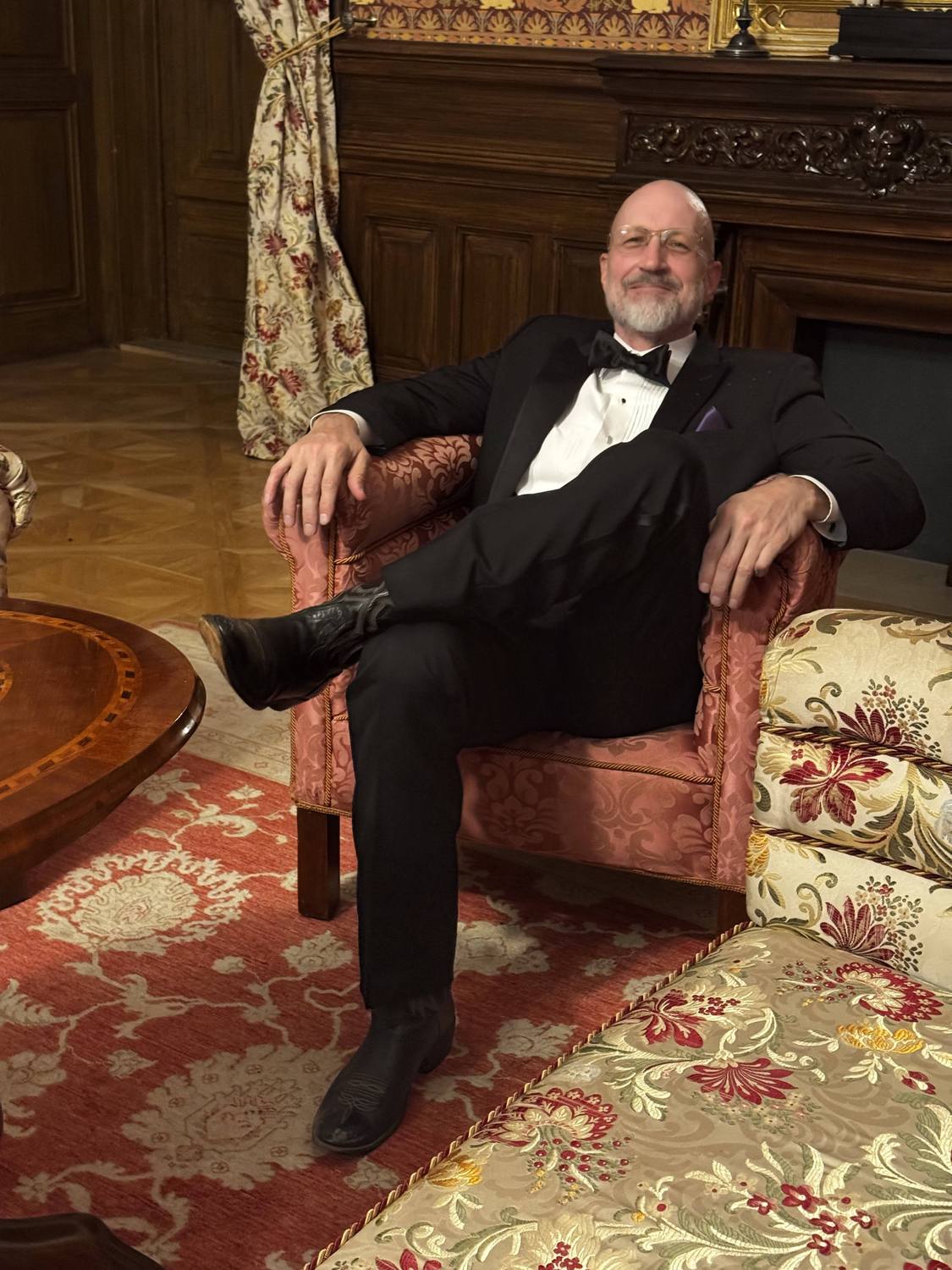
The reason for the whole trip. Saturday turned formal in stages: a gathering of the wedding party at one of the city’s grandest new hotels, a few portraits, and then a cab to the coach that carried us an hour west of Budapest to a neo-Gothic castle for Chelsea & Kristof’s wedding.
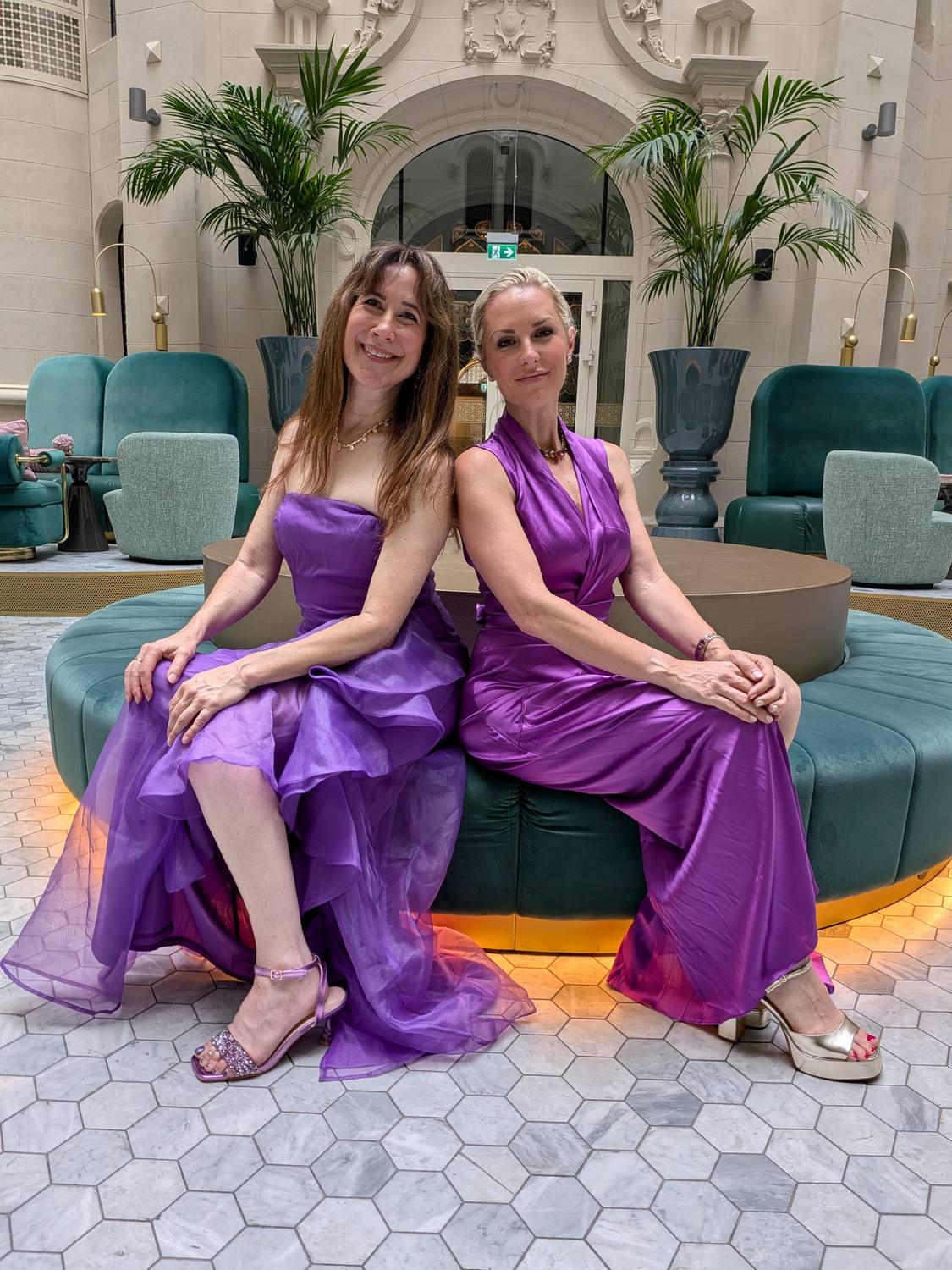
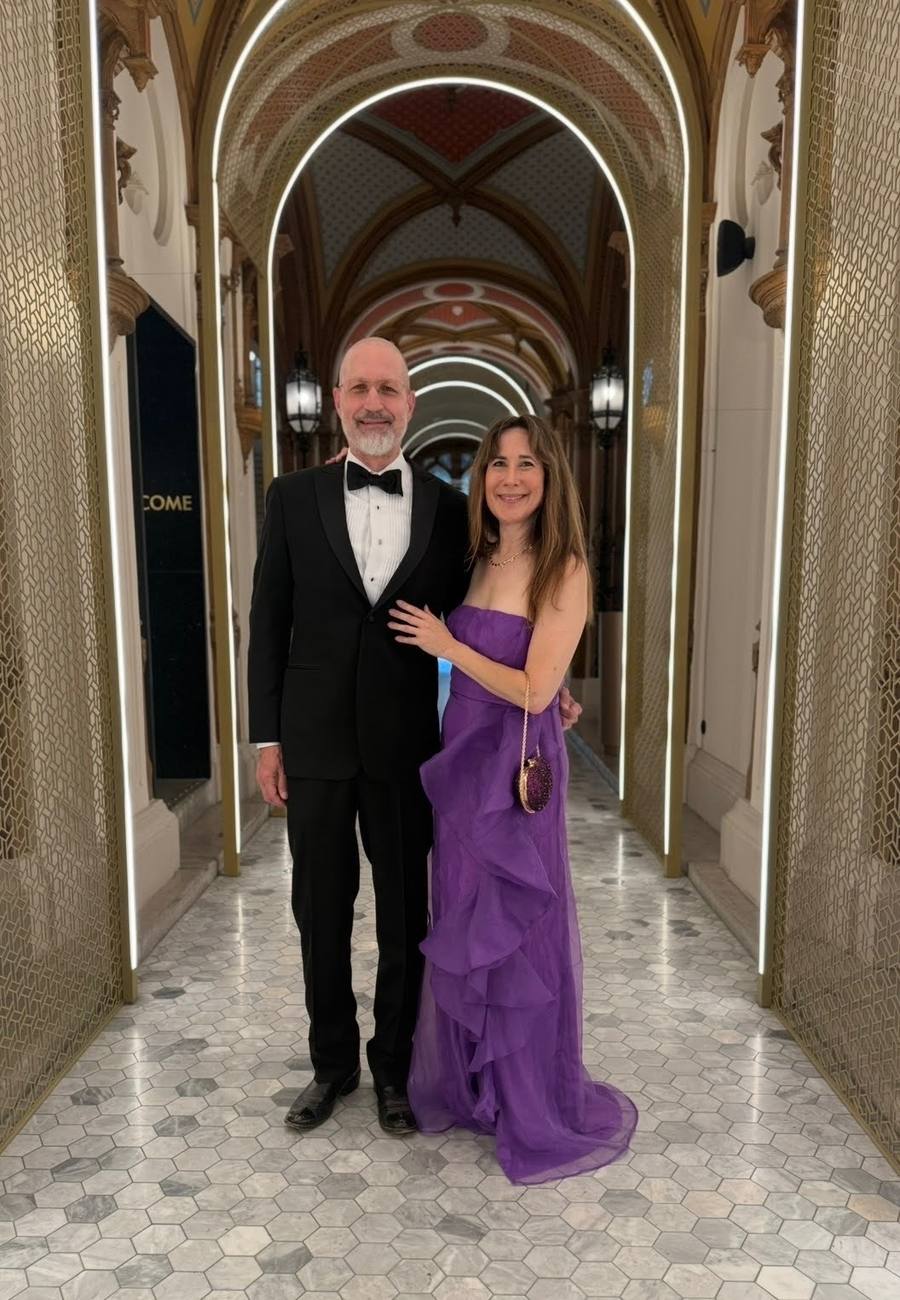
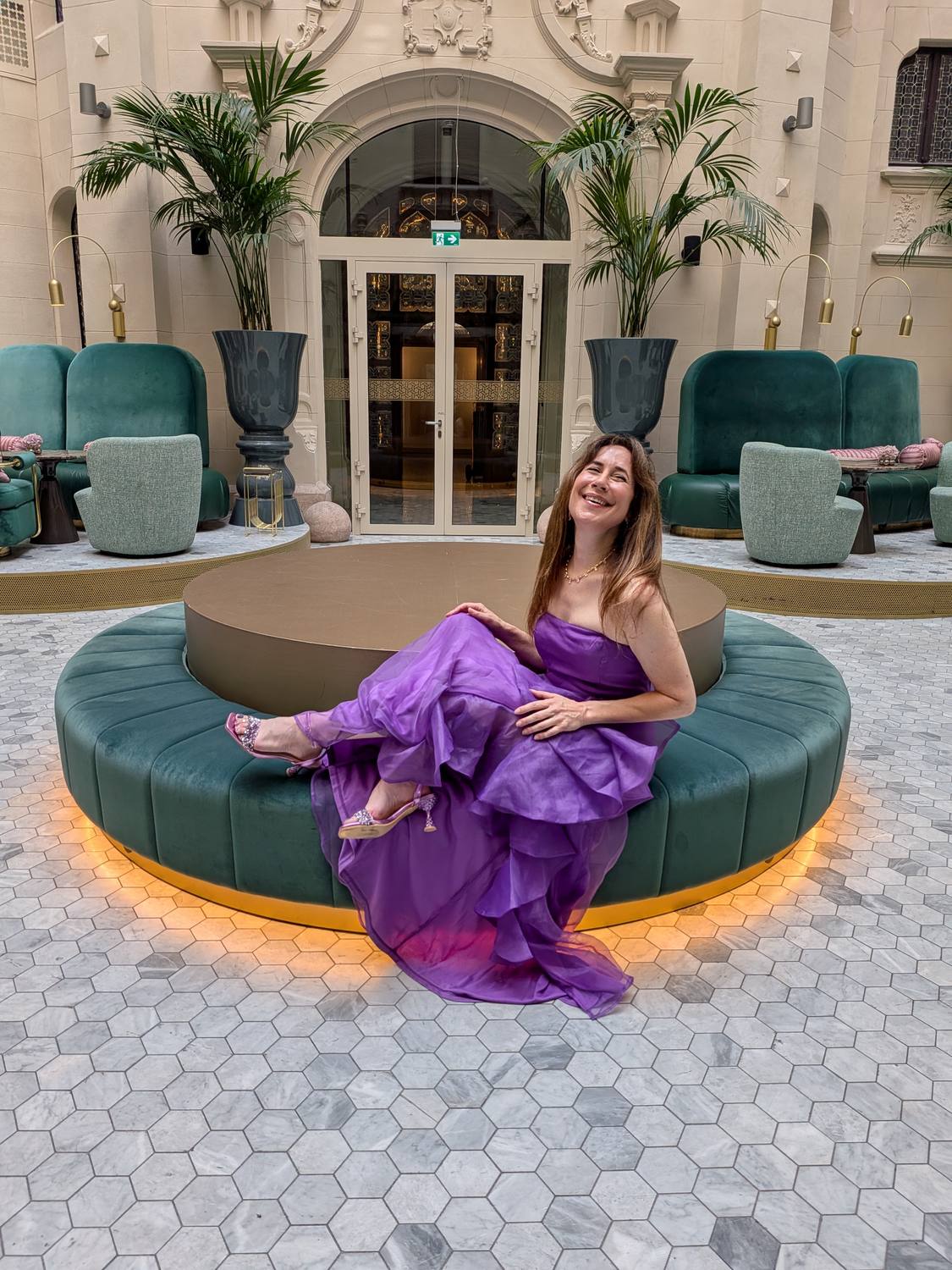
The wedding party gathered at the W Budapest — itself a piece of theatre. It occupies the Drechsler Palace on Andrássy út, a French-Renaissance pile of 1883–86 by Ödön Lechner (later home to the State Ballet Institute) that stood empty for years before reopening in 2023 as the W. Lisa and Rebecca arrived in coordinated gowns — amethyst and orchid — we stole a few portraits in a gilded arcade, and then caught a cab from the W out to meet the wedding coach.


From a staging point near the river a coach carried the wedding party about 65 km southwest to the village of Nádasdladány.
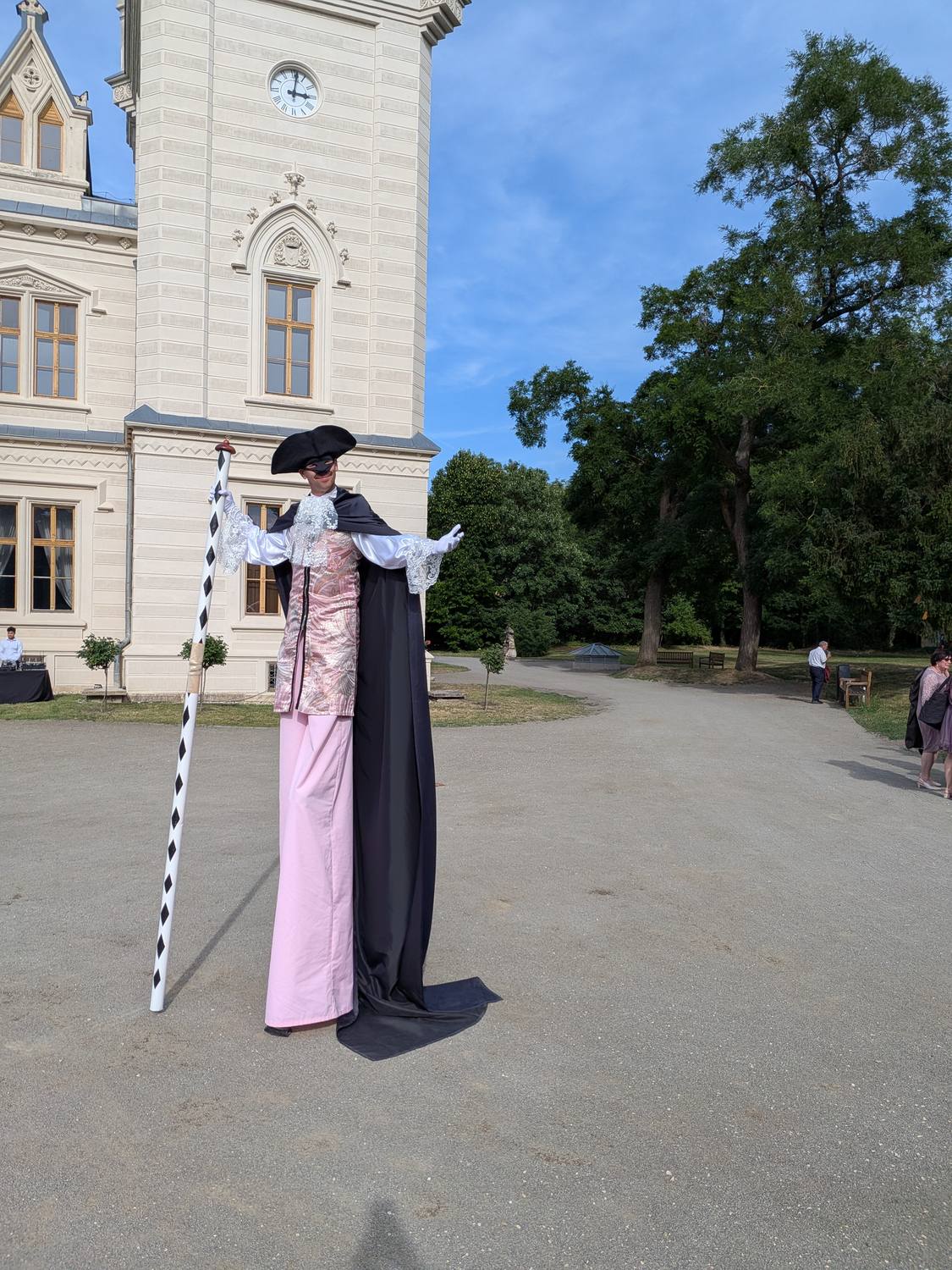
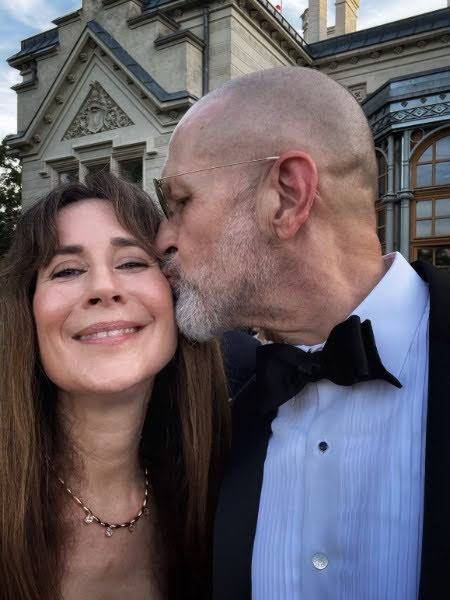
The Nádasdy Castle is a storybook pile in its own right: a neo-Gothic, English-Tudor-style mansion built 1873–76 for Count Ferenc Nádasdy, designed with a hand from Alajos Hauszmann (who would later remodel Buda Castle itself), set in a 24-hectare English landscape park. Looted after the war and left to rot for decades under the Ministry of Defence, it was rescued by the Hungarian state and restored into the museum-and-events venue it is today — striking enough that it has doubled as a vampire’s mansion in the Underworld films.
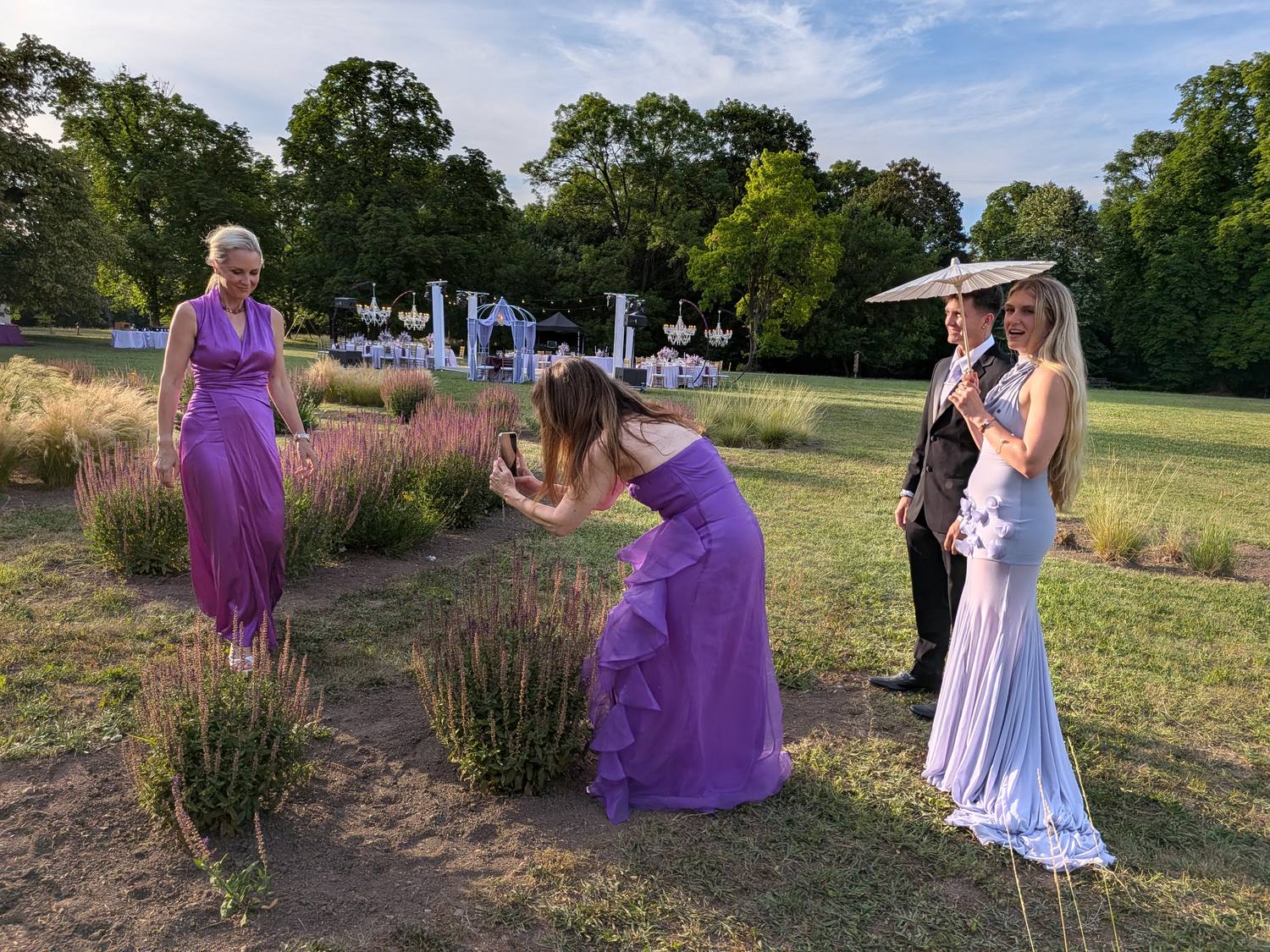
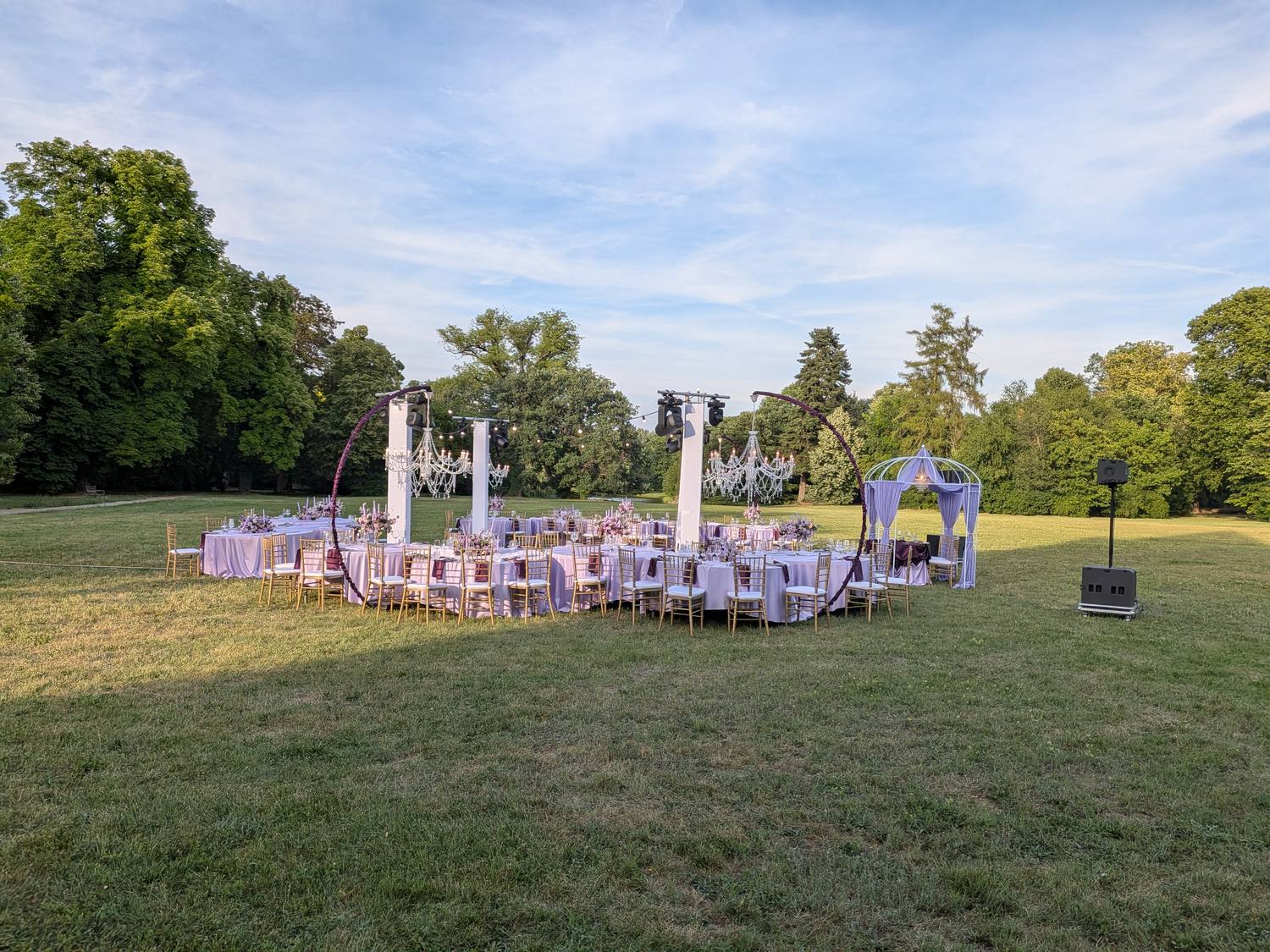
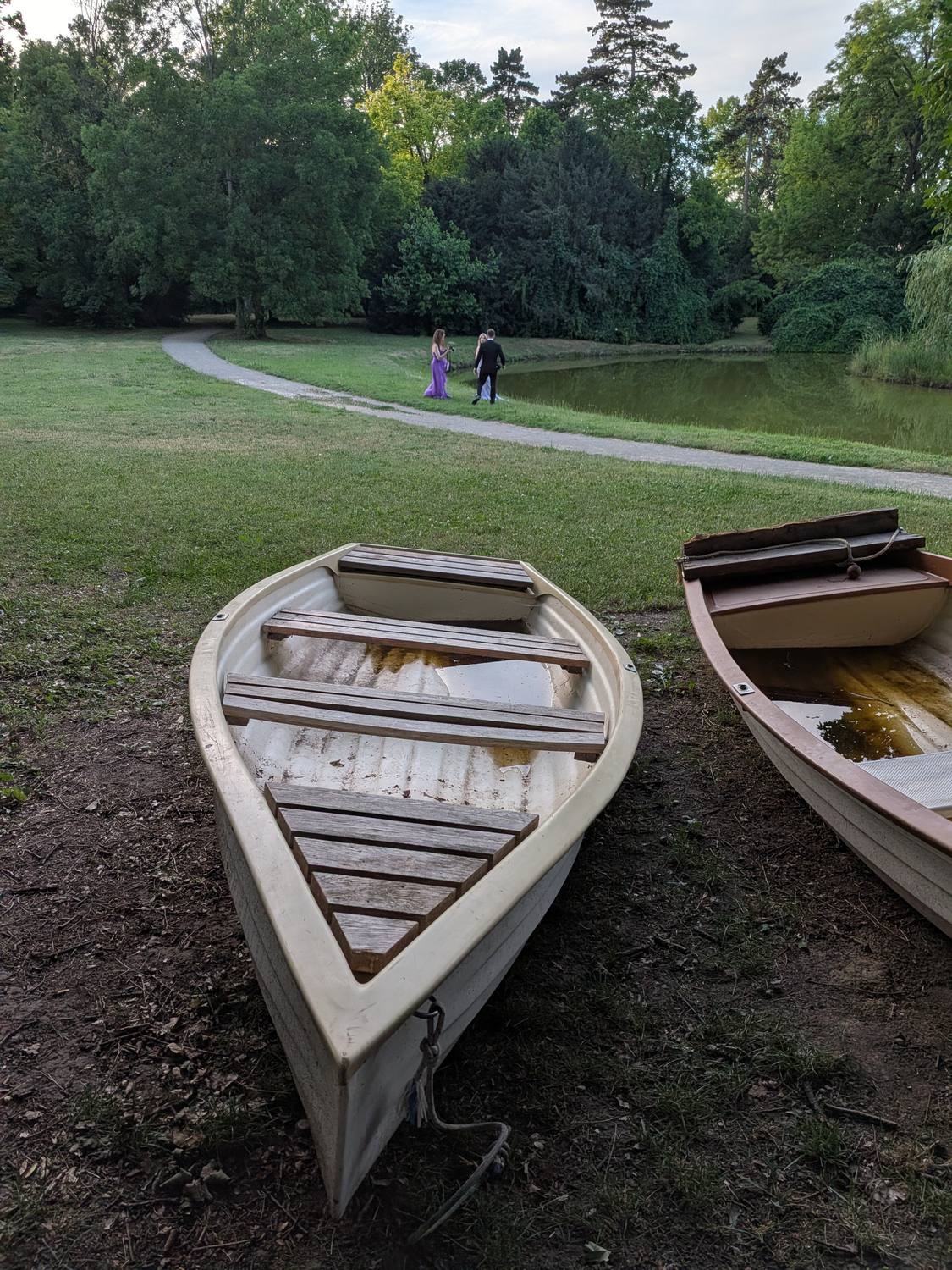
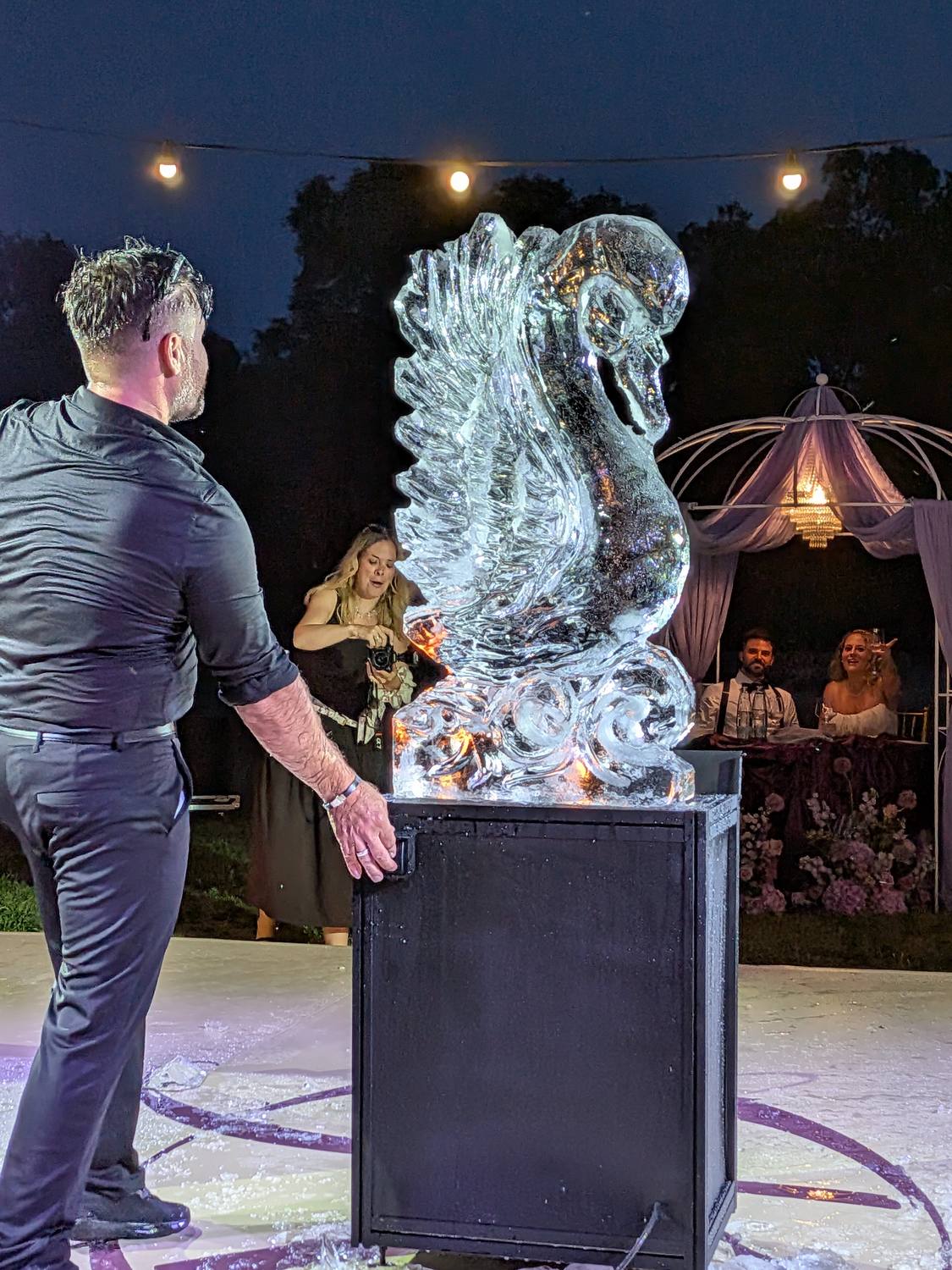
What waited there was pure theatre. A stilt-walker greeted the cars at the gate. Chandeliers hung over a lawn set for dinner. There were lavender gardens and rowboats by a still lake, a band, dancing inside the castle, and — after dark — an ice swan, a small lit carousel, and a flourish of fire.


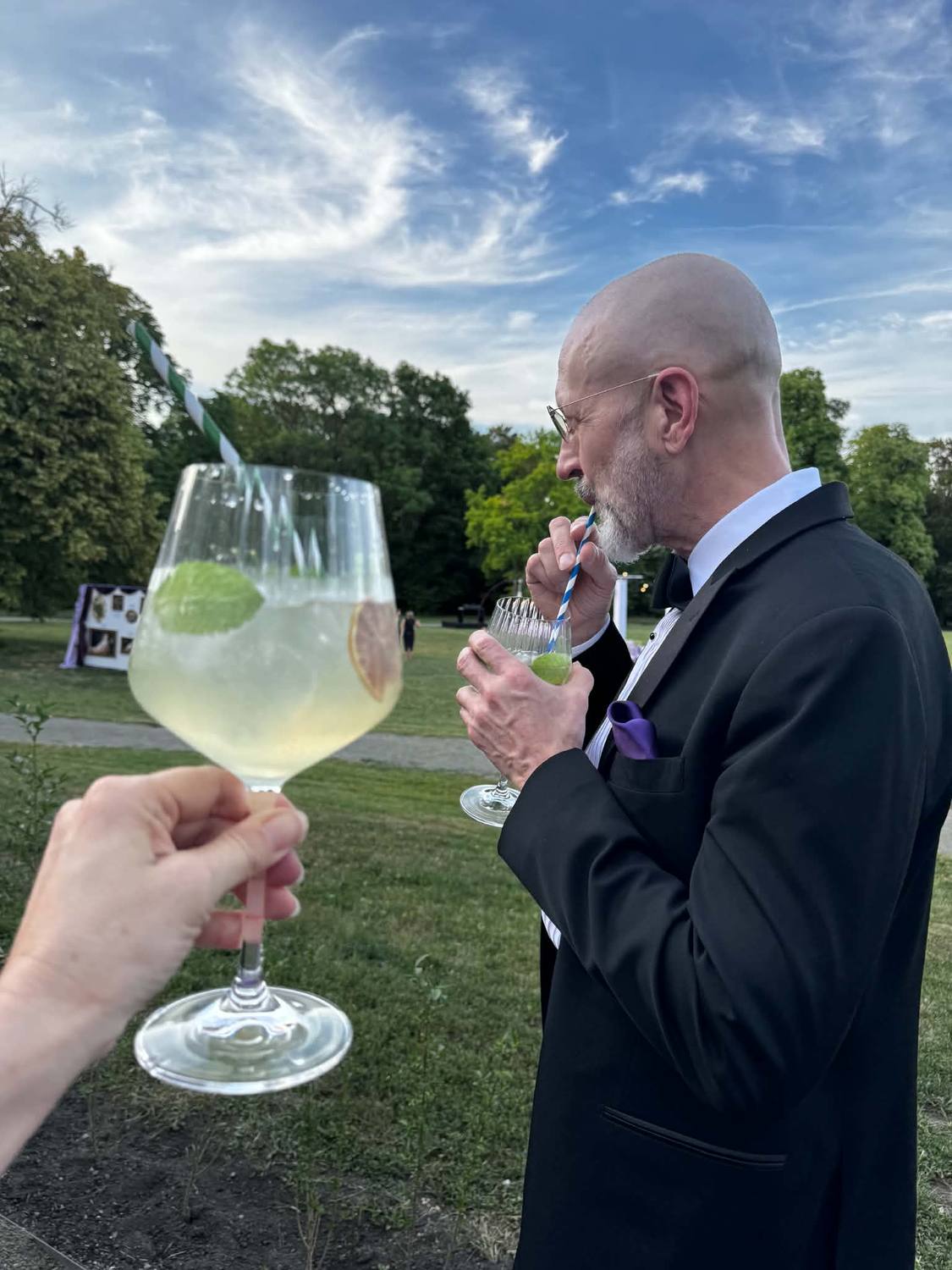
As the light went, dinner came out onto the grass under those chandeliers — opening, memorably, with a chilled sour-cherry soup (meggyleves), a Hungarian summer in a bowl.


More from the day: the couple’s wedding site, and the full shared GuestPix gallery where everyone’s photos live.
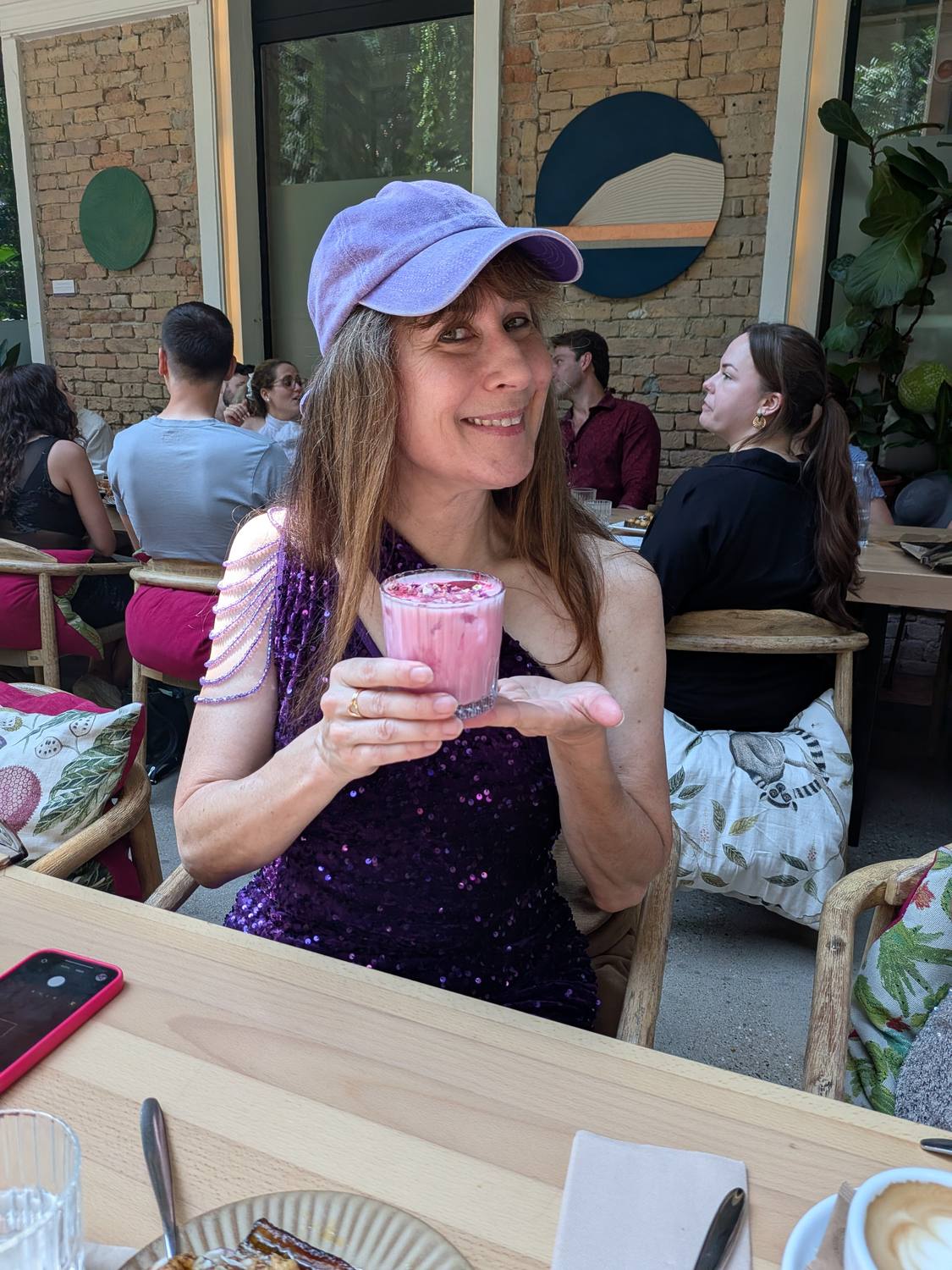
After a wedding that ran past midnight, Sunday asked very little of us and we obliged: a botanical brunch, a wander through the centre, an improbable Moon, wine on the Buda side, and two more scooter rides to round out the tally.
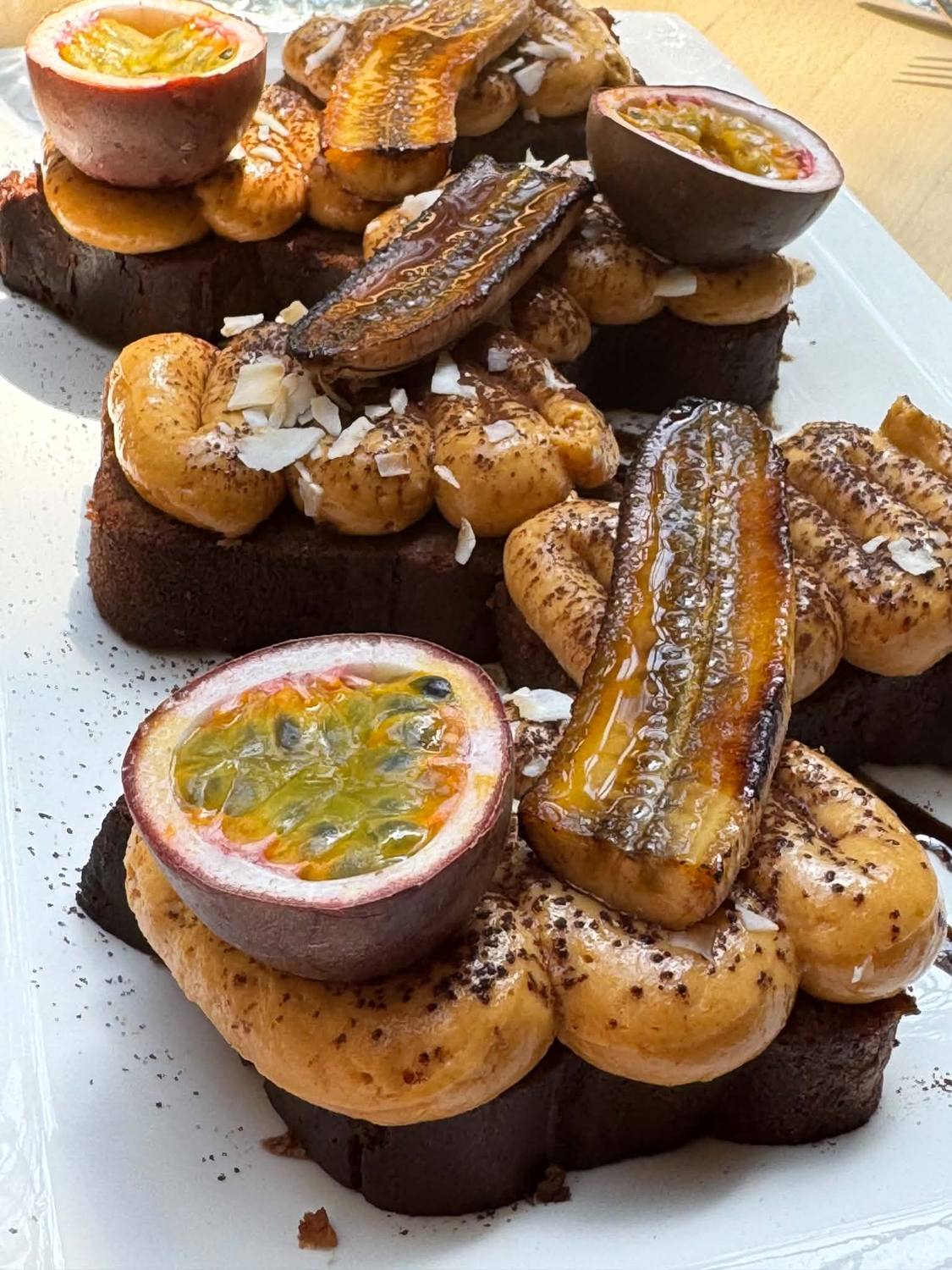
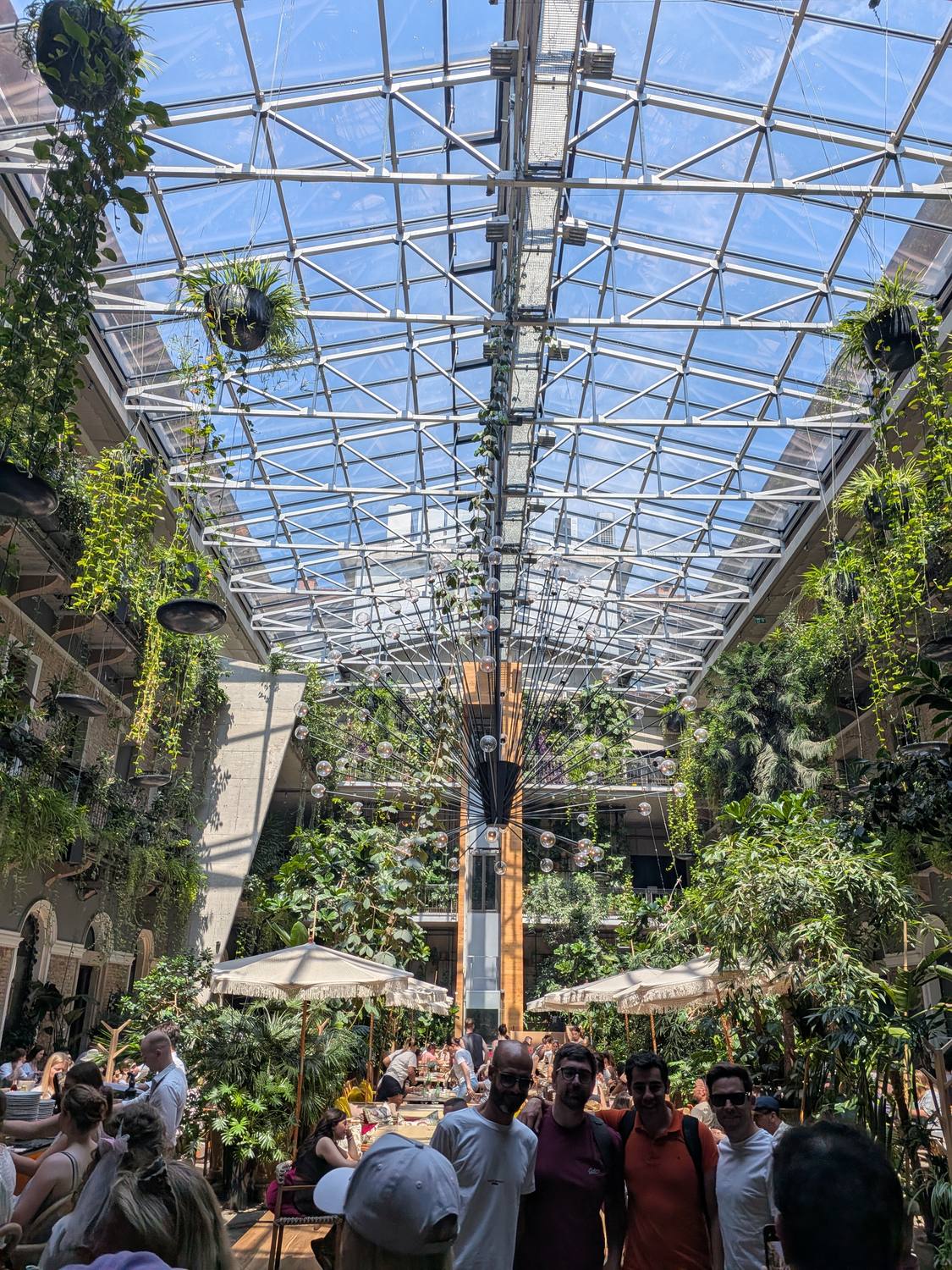
Brunch was at Twentysix on Király utca, a glass-domed “urban jungle” kept at a constant tropical 26°C under banana trees, rubber plants and palms — the most photogenic plate of eggs in the district. Then a slow walk to Vörösmarty Square and Fashion Street (where Lisa found several pairs of trousers at Bershka), before the city pulled its strangest trick on us.


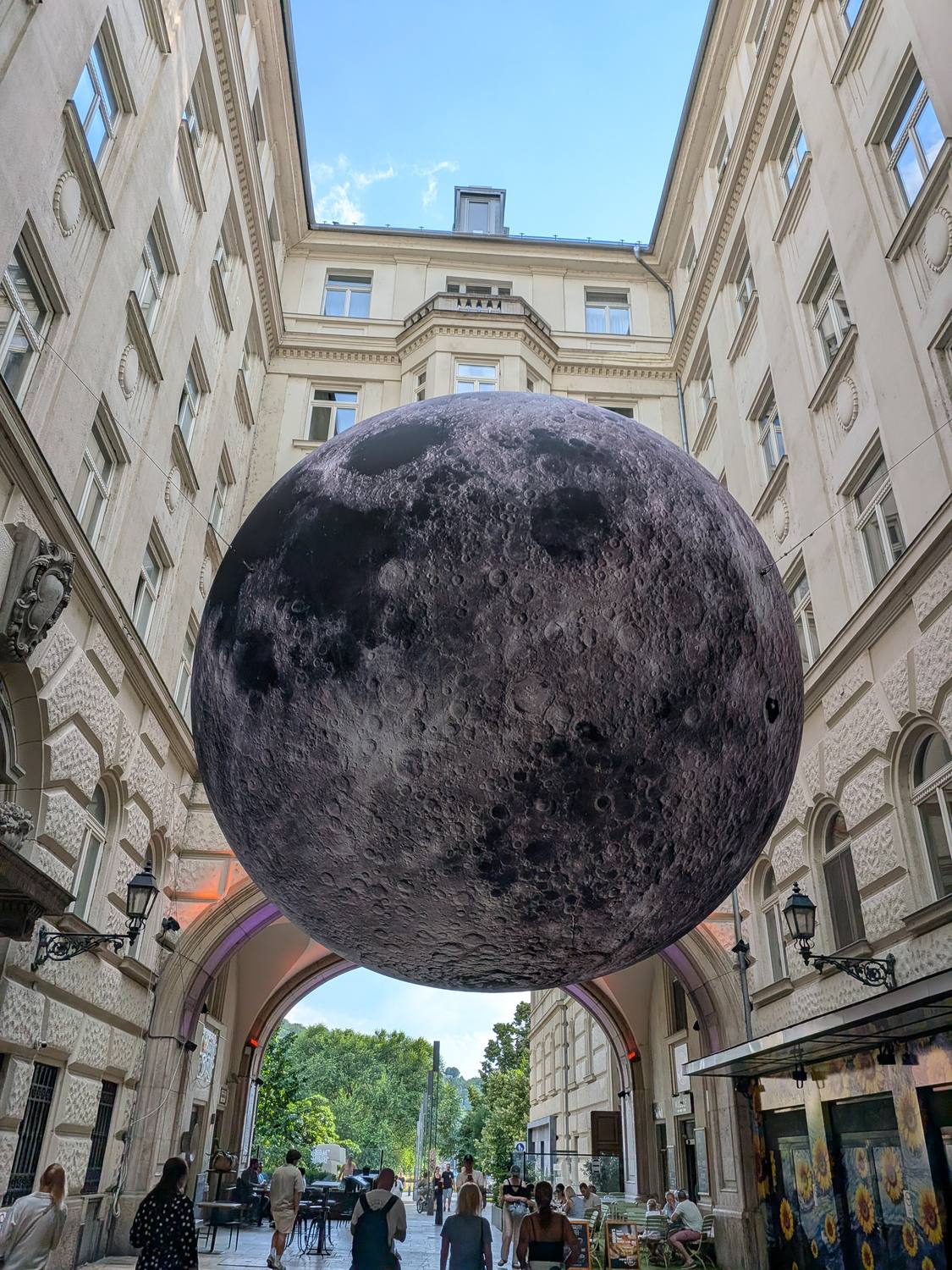
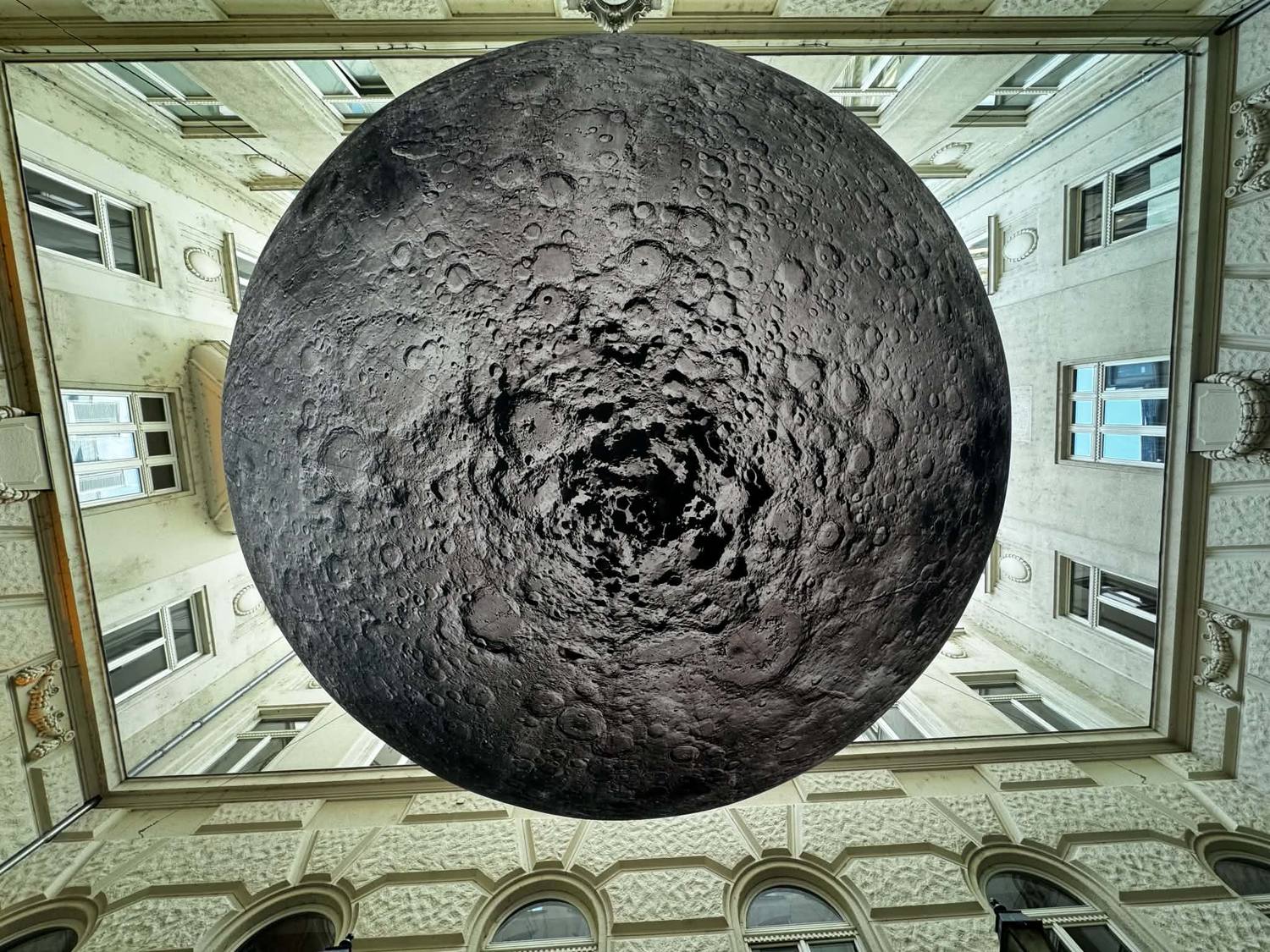
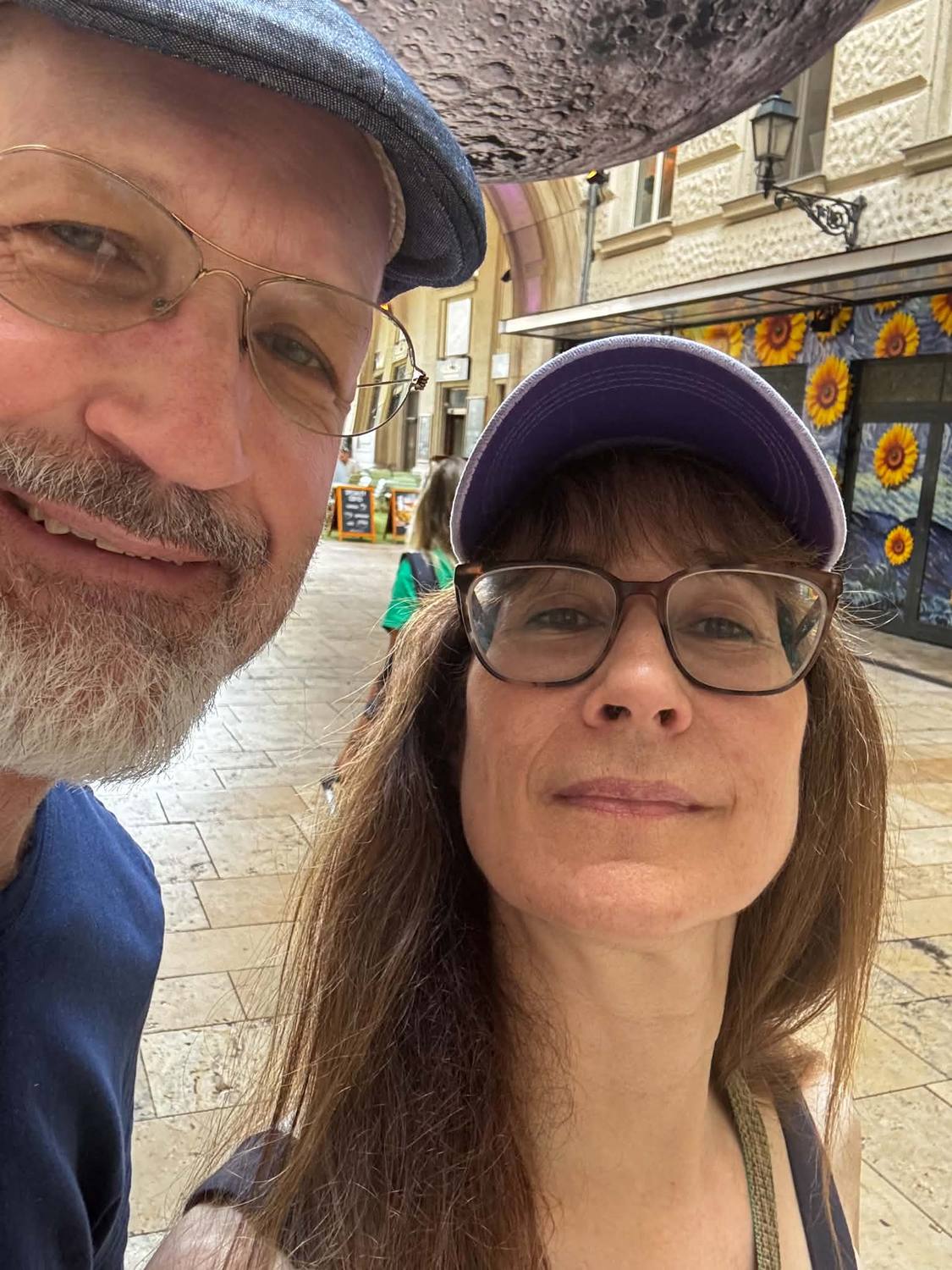
In Piarista köz — a short covered passageway just off Váci utca, steps from the Danube — something extraordinary hung overhead: a glowing, seven-metre replica of the lunar surface, suspended between the historic buildings that line the walkway. Detailed enough to read every crater and sea, it’s the kind of floating Moon (Luke Jerram’s touring Museum of the Moon) that stops a street in its tracks. Coming upon it without warning, as if the city had simply decided to keep a moon overhead, is exactly the sort of thing Budapest does to you.


From there we scootered across to the Buda side for an evening at Palack Borbár on Szent Gellért tér — a snug wine bar (its name simply means “bottle”) that channels the romance of a Hungarian cellar, all small-producer bottles and homemade tapas — before one last Lime ride home past the National Museum closed out the day.

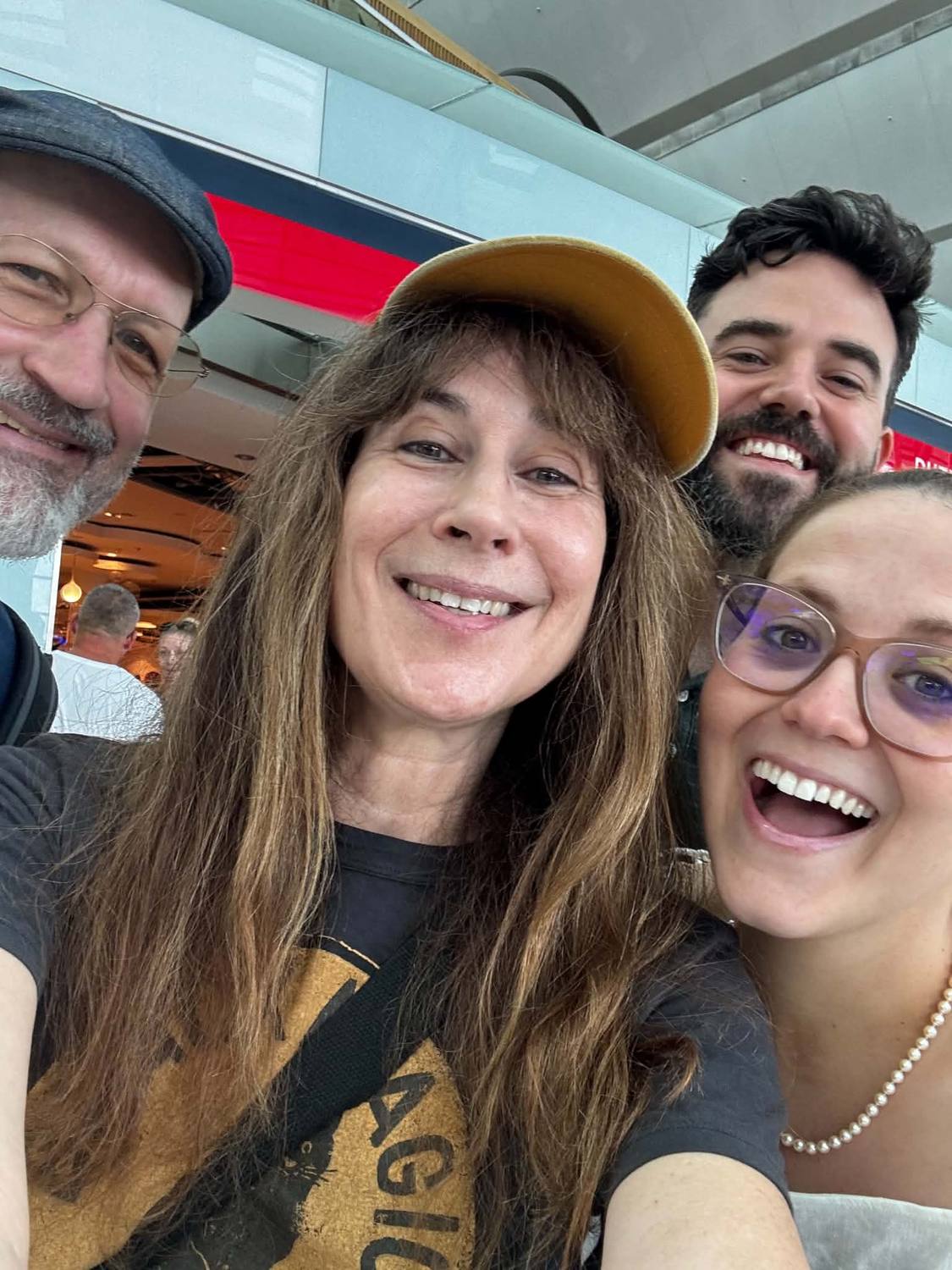
Our last Budapest morning: one final coffee from Goamama, a drive out to Liszt Ferenc Airport — and there, waiting to fly home, the trip handed us a parting gift. We turned around and there they were — Chelsea & Kristof, the newlyweds themselves, flying out the same morning: them bound for Nice, us for San Francisco. Of all the gates in all of Budapest.
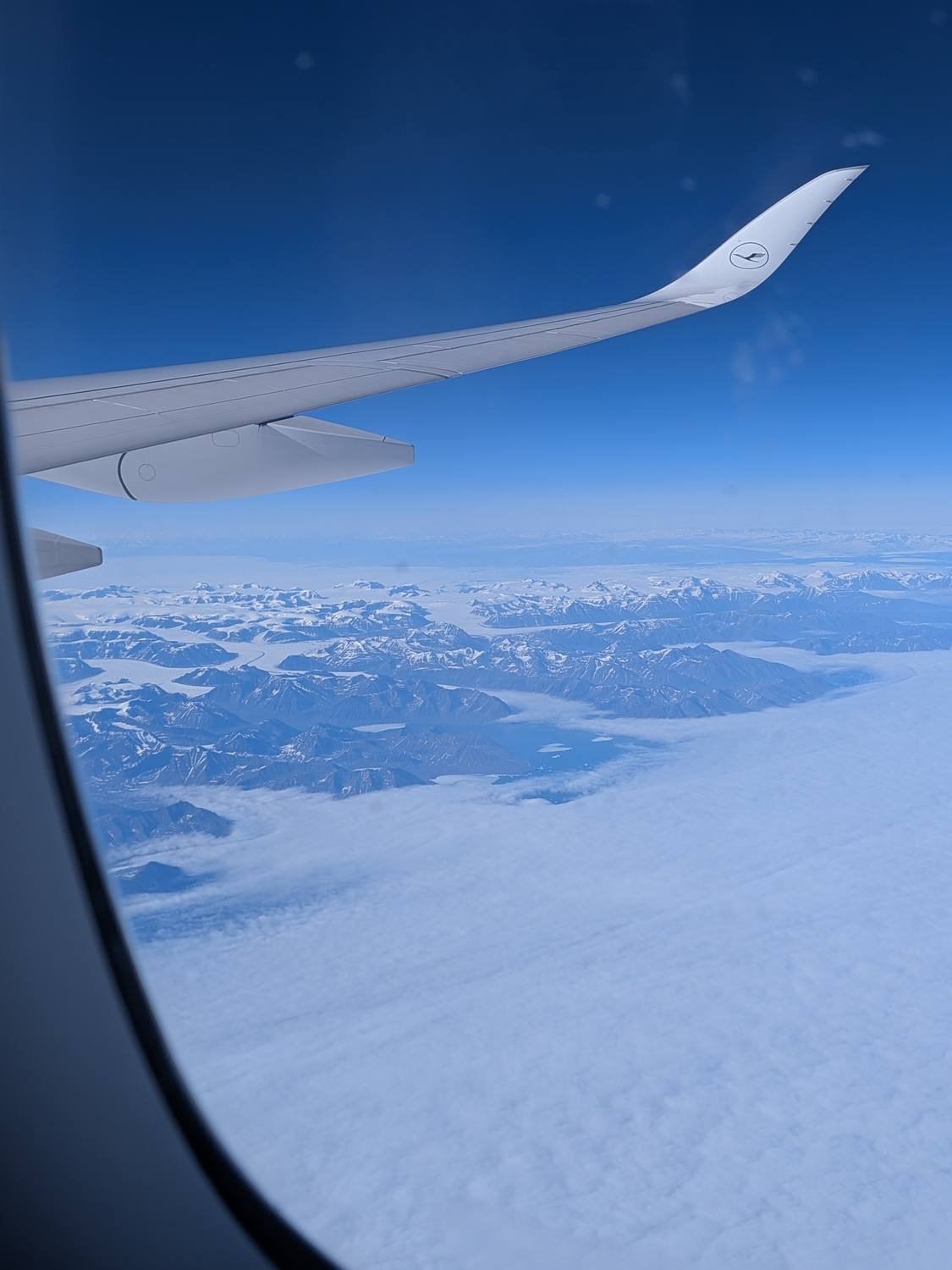
And then the long way home — Budapest to Munich to San Francisco — over a wall of snow-capped peaks.


Budapest got the arithmetic wrong on the way in and everything else exactly right. We’d go back tomorrow.
Every venue above links out; gathered here for the planning of your own trip. Descriptions draw on each place’s own site and public histories.